Discover seven remarkable Portuguese monasteries that make ideal centerpieces for a multi-day itinerary across central and northern Portugal. Learn how to connect these monumental sites seamlessly while enjoying world-class regional food, wine, and stress-free travel.
1. Jeronimos Monastery, where Lisbon greets the age of maritime exploration
Standing near the banks of the Tagus River in Belem, the Jeronimos Monastery represents the pinnacle of Manueline architecture. Commissioned by King Manuel I in the early 1500s to celebrate Vasco da Gama’s voyage to India, this vast limestone complex dazzles visitors with maritime carvings of ropes, sea creatures, and armillary spheres etched into golden stone. For American travelers starting their journey in Lisbon, it serves as the ultimate introduction to Portugal’s imperial past, housing the tombs of both Vasco da Gama and poet Luis de Camoes.
Because Belem sits just twenty minutes west of central Lisbon, you can easily pair a morning walk through its ornate two-story cloister with warm custard pastries from the historic bakery just down the street. Rather than navigating metropolitan traffic or ticket queues on your own, having a professional driver and Mercedes-Benz vehicle waiting nearby turns a busy sightseeing morning into a relaxed, smooth transition before heading north.
2. Convent of Christ in Tomar, the enigmatic stronghold of the Knights Templar
Perched on an oak-covered ridge two hours northeast of Lisbon, the Convent of Christ in Tomar was originally founded in 1160 as a Templar castle. Later transformed into the headquarters for the Order of Christ, the fortress protects the Charola, a rare sixteen-sided Romanesque rotunda where armored knights attended Mass on horseback. Walking through its succession of Renaissance cloisters and standing before the celebrated Chapterhouse Window, carved with intricate corals and nautical chains, visitors quickly realize this site rivals any medieval monument in France or Italy.
Tomar works wonderfully on day two or three of a multi-day transfer between Lisbon and the north. After exploring the fortress grounds, you can step down into the historic riverside grid of Tomar for a quiet lunch of roasted goat or river lamprey paired with crisp local Ribatejo wines, all while enjoying the convenience of widely spoken English and gracious hospitality.
3. Batalha Monastery, Portugal’s grand monument to national independence
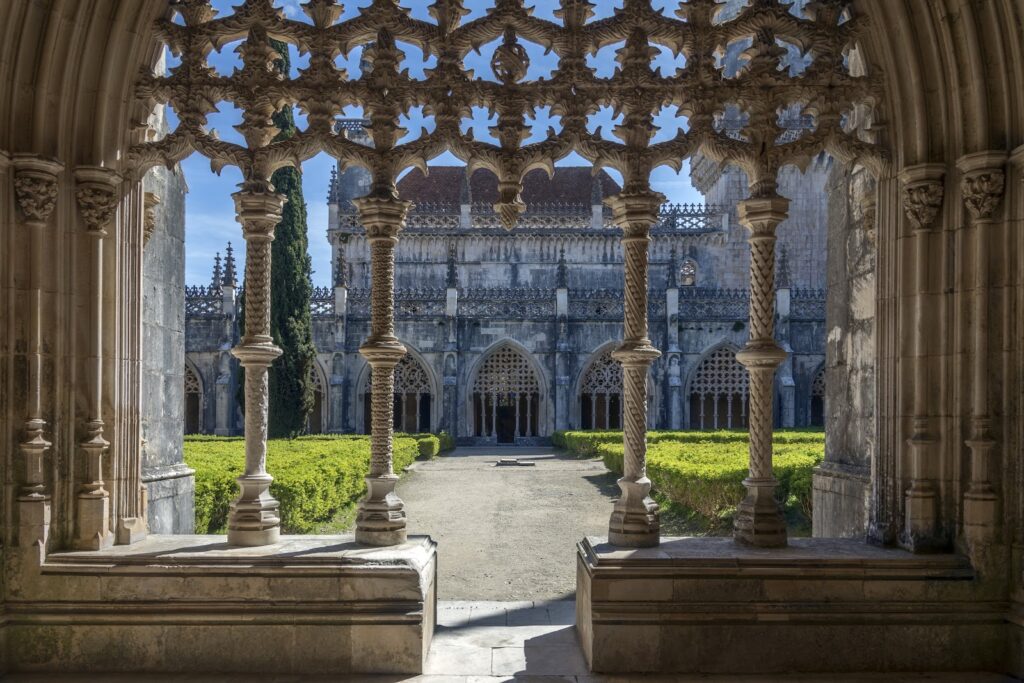
Built to honor the Portuguese victory over Castilian forces at the Battle of Aljubarrota in 1385, Santa Maria da Vitoria in Batalha is an astonishing achievement of late Gothic and flamboyant Manueline design. The interior nave soars overhead in pale sandstone, leading to the Founder’s Chapel where King Joao I and his English queen, Philippa of Lancaster, rest hand in hand. Around the back of the complex lie the Unfinished Chapels, an open-sky octagonal wonder where monumental stone pillars rise toward the clouds, showcasing lace-like limestone masonry that was never roofed.
Batalha sits less than forty minutes from Tomar, making it easy to link both sites on the same travel day. Visiting with a knowledgeable local driver and guide allows you to shape the day around your personal interests, taking extra time in the sunlit cloisters or stopping at a nearby traditional tavern for regional leitao, the crisp roasted suckling pig beloved throughout central Portugal.
Browse our travel inspiration for ideas, or tell us what kind of day you have in mind.
4. Alcobaca Monastery, a masterpiece of early Cistercian devotion and royal romance
Founded in 1153 by King Afonso Henriques, the royal abbey of Alcobaca was Portugal’s first major Gothic building. Unlike the lavishly decorated chapels of Batalha, Alcobaca reflects the austere purity favored by Saint Bernard of Clairvaux, featuring immense, unadorned stone aisles that amplify footsteps and whispered voices. At the transept rest the intricately carved white marble tombs of King Pedro I and his murdered mistress Ines de Castro, placed foot to foot so that on Judgment Day, the tragic lovers will rise and immediately see each other.
Alcobaca forms a natural triangle with Batalha and the coastal cliff village of Nazare. After viewing the vast monastic kitchen with its running river channel, you can drive twenty minutes to the oceanfront for fresh grilled sea bass and chilled white wine from the nearby Encostas de Aire hills, soaking in Atlantic views before retiring to a quiet country hotel.
5. Santa Clara-a-Velha in Coimbra, a riverside convent reclaimed from the mud
Situated directly across the Mondego River from Coimbra’s historic university hill, the convent of Santa Clara-a-Velha offers a poignant window into monastic life. Built in the fourteenth century for the Poor Clares by Queen Elizabeth of Aragon, the convent suffered repeated flooding from river waters until the nuns were forced to abandon it in the late 1600s. A modern archaeological restoration rescued the lower Gothic church from centuries of alluvial mud, creating an extraordinary glass-walled walkway where visitors look down into the original stone naves and excavated living quarters.
Coimbra is an essential overnight base midway between Lisbon and Porto, well-loved by American couples and families for its walkable brick alleys, traditional fado houses, and rich university traditions. Pairing Santa Clara-a-Velha with an afternoon walk around the Joanina Library provides a complete picture of central Portugal’s scholarly and spiritual heritage, without the long transit times common in larger European countries.
6. Monastery of Serra do Pilar, watching over the Douro River from Vila Nova de Gaia
Rising dramatically from an escarpment above the iconic Dom Luis I bridge, the seventeenth-century Monastery of Serra do Pilar presents one of the most breathtaking panoramic vistas in Europe. What makes this Renaissance complex architecturally unique is its circular church and round cloister, a rare design feature that echoes classic Italian military fortifications. Across the river lies the colorful Ribeira riverfront of Porto, while below, traditional wooden rabelo boats sway along the port wine lodge quays.
Because the monastery sits on the Vila Nova de Gaia riverbank, it serves as the ultimate scenic bridge between urban exploration and northern wine country. Travelers can begin their day taking in the morning river mist from the monastery terrace, follow it with a tour of historic port aging cellars, and then sit down for a leisurely lunch of octopus rice paired with Douro reds, all without worrying about steep hill climbs or inner-city parking.
7. Monastery of Tibaes, an opulent Benedictine retreat near Braga
Connecting these historic treasures across Portugal offers American travelers an unforgettable blend of deep history, short drives, and remarkable value. Traveling through central and northern Portugal with Portugal Magik in a private, air-conditioned Mercedes-Benz vehicle removes the stress of driving, allowing you to immerse yourself fully in the architecture, regional flavors, and timeless beauty of these sacred sites.
Plan your own day
Share your dates, group size and interests, and we will suggest a tailored plan with a local driver/guide.