From Nazare’s fishing traditions to Tavira’s island beaches, Portugal rewards a coastal trip paced over several days. Link these eight towns across roughly two weeks, or choose one regional cluster for a shorter escape.
1. Nazaré, start with fishing heritage and Atlantic views
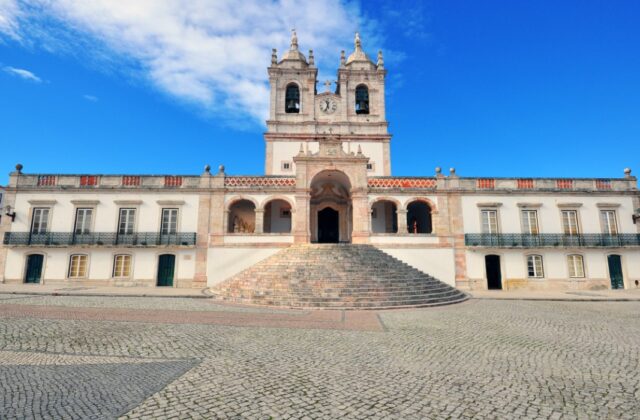
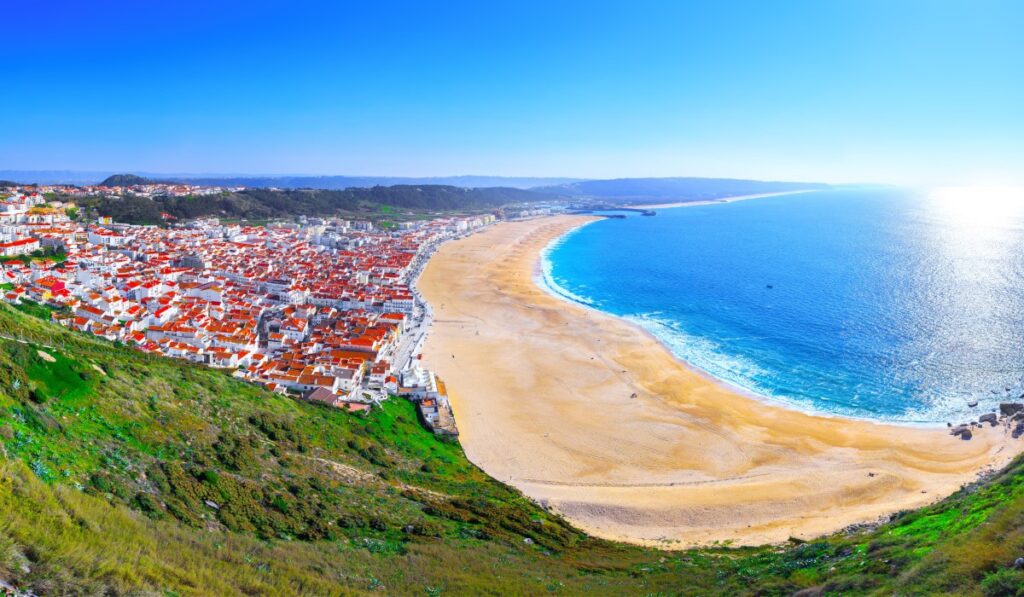
Begin with two nights in Nazaré, roughly a 90-minute drive north of Lisbon Airport in normal traffic. The lower town puts restaurants, the fishing beach and long waterfront walks close together. Above it, Sítio offers sweeping views and the Sanctuary of Our Lady of Nazaré, associated with a medieval devotional tradition. Take the funicular when operating, or travel up by road. This is a rewarding first stop for Americans who want a working coastal town rather than another European resort strip.
Allow your first afternoon for settling in, then visit the headland near São Miguel Arcanjo Fort the following morning. Praia do Norte’s celebrated giant waves depend on conditions, with the biggest swells generally occurring in the cooler months. They are not a daily spectacle or an invitation to swim. Order grilled fish or caldeirada, a Portuguese fish stew, and save time for the waterfront rather than racing south immediately.
2. Peniche, make room for maritime history and a beach afternoon
Continue south to Peniche, approximately an hour from Nazaré. Its fortress served as a political prison during Portugal’s dictatorship and now houses the National Museum of Resistance and Freedom. Give that visit proper attention before lunch around the harbor. Peniche still has an active fishing industry, making sardines in season and other grilled local catches sensible choices. Ask what is fresh rather than assuming every item on a seafood menu was landed nearby.
Spend the afternoon at Baleal, where sandy beaches flank a small rocky peninsula. Surf conditions vary by beach and weather, so families should follow lifeguard advice. One night works for a history-and-coast stop; two make sense if beach time matters. The exposed cliffs around Cabo Carvoeiro are particularly atmospheric, but wind and uneven ground warrant sturdy shoes and care near edges.
3. Ericeira, slow down between surf beaches and seafood tables
Allow around an hour from Peniche to Ericeira, with longer travel time if you follow smaller coastal roads. Whitewashed houses, blue detailing and a compact old center make this an easy place to spend a night without building a dense sightseeing schedule. Ericeira became Europe’s first World Surfing Reserve in 2011, but you need not surf to appreciate the coastline. Watch experienced surfers from a safe viewpoint above Ribeira d’Ilhas, then return to town for lunch.
Seafood rice suits a leisurely meal, especially when shared, while a glass of Vinho Verde complements simpler grilled fish. English is widely spoken in visitor-facing businesses, reducing friction for American travelers. Some streets are steep or cobbled, so choose walks accordingly. Compared with another packed city break in France or Italy, the appeal here is fewer appointments and more unclaimed afternoon.
Browse our travel inspiration for ideas, or tell us what kind of day you have in mind.
4. Cascais, use two nights for an easy coastal base
Cascais lies roughly an hour south of Ericeira, depending on the route and traffic. Its transformation from fishing town to fashionable seaside retreat accelerated when King Luís I established a summer residence here in 1870. Today, the sheltered town beaches, pedestrian streets and museum quarter work particularly well for couples or multigenerational families whose interests differ. Spend your arrival afternoon around the harbor and Praia da Rainha rather than heading straight into another transfer.
On your second day, combine the Casa das Histórias Paula Rego with the coastal scenery at Boca do Inferno. Portugal Magik’s Mercedes-Benz vehicles let you connect these stops without handling parking yourself, and a local driver/guide can shape the day around the guests, adjusting walking time and lunch stops. Cascais is not a bargain enclave, but comparing hotel locations and traveling outside peak summer can improve value.
5. Sesimbra, pair a fishing town with the Arrábida coast
Travel from Cascais to Sesimbra in roughly 75 to 90 minutes, allowing extra time around Lisbon’s bridges. Stay two nights if you want both town time and Arrábida scenery. Sesimbra’s medieval castle stands above the bay, while the waterfront below offers a straightforward rhythm of beach, lunch and an evening stroll. The uphill castle visit involves uneven surfaces, so travelers with limited mobility may prefer viewpoints and the lower town.
Plan Arrábida separately rather than squeezing it between meals. Seasonal vehicle restrictions affect access to some beaches, making current local advice important. Swimming conditions still need checking, even in sheltered-looking coves. Back in Sesimbra, try grilled black scabbardfish when available or simply ask for the day’s catch. Wines from the Setúbal Peninsula keep the meal rooted in the surrounding region.
6. Vila Nova de Milfontes, break the journey through the Alentejo
From Sesimbra, allow approximately two and a half hours to Vila Nova de Milfontes. Two nights here prevent the Alentejo coast from becoming merely a drive between Lisbon and the Algarve. The town sits at the mouth of the Mira River, within the Southwest Alentejo and Vicentine Coast Natural Park. Walk the center on arrival, then explore the waterfront around the small São Clemente fort, built to defend the river entrance.
Use your full day for beach time and short coastal walks, accounting for tides, currents and sun exposure. River beaches are not automatically safe swimming areas. Look for arroz de polvo, octopus rice, and regional Alentejo wines. For Americans comparing costs with celebrated French or Italian coastal destinations, meals here can offer appealing value, although August accommodation requires careful comparison and early planning.
7. Lagos, give the western Algarve more than a photo stop
Lagos is roughly a two-hour drive from Vila Nova de Milfontes. Stay two nights to separate the historic center from the cliffs and beaches. Visit the church of Santo António and the adjoining municipal museum, then consider the Mercado de Escravos museum, which addresses the town’s connection to the early Atlantic trade in enslaved Africans.
Reserve another morning for Ponta da Piedade’s viewpoints and boardwalks. Access to individual beaches can involve many steps, and exposed stretches get hot. A relaxed lunch afterward is preferable to stacking several cliff beaches into one afternoon.
8. Tavira, finish with river walks and an island beach
Finish with two nights in Tavira, about 75 to 90 minutes east of Lagos. The Gilão River, tiled facades and castle gardens give the center a different feel from the western Algarve. For beach time, check seasonal ferry services to Ilha de Tavira and leave space for the crossing rather than treating it as a quick roadside stop.
Try octopus dishes or, when available, clams prepared with garlic and coriander. Faro Airport is approximately 40 minutes away by road. Taken together, these towns suit about two weeks; with fewer days, choose the Lisbon-area cluster or the Alentejo and Algarve. The best coastal itinerary leaves time to enjoy where you have stopped.
Plan your own day
Share your dates, group size and interests, and we will suggest a tailored plan with a local driver/guide.