Build a six-day coastal journey from Cascais to Sao Pedro de Moel, pairing Atlantic photographs with seafood lunches, historic towns and time to enjoy each stop. Three overnight bases keep this route comfortable without turning every morning into another packing session.
1. Boca do Inferno, an easy coastal start from Cascais
Begin with two nights in Cascais, roughly 40 minutes from Lisbon Airport when traffic allows. On day one, settle in before visiting Boca do Inferno, where Atlantic water enters a collapsed coastal cavern beneath limestone cliffs. The established viewing areas offer dramatic photographs without requiring a long hike. Stay behind barriers, particularly when waves are breaking hard against the rock.
Combine the stop with Cascais’s old center and fishing harbor rather than another substantial drive. English is widely spoken in visitor-facing businesses here, easing the first afternoon after an overnight flight from the United States. Order grilled fish and a glass of Bucelas white wine, then leave the evening unscheduled.
2. Guincho, wide horizons without a demanding walk
Make Guincho the first stop on day two, following the coastal road west from Cascais. This broad beach sits beneath the Sintra hills, with dunes, surf and an expansive Atlantic horizon. Photograph it from established beach access points or roadside stopping areas where parking is permitted. Wind is part of the setting, so bring a light layer even when Cascais feels warm.
Guincho works especially well for couples or multigenerational families who want coastal scenery without committing to a cliff trail. Strong surf and currents make this a photography stop rather than an automatic swimming plan. Continue toward Cabo da Roca, allowing around half an hour for the drive, depending on your route and traffic.
3. Cabo da Roca, the western edge of continental Europe
Cabo da Roca provides the geographical headline: this is continental Europe’s westernmost point. Its lighthouse began operating in 1772, and the headland offers broad views over steep cliffs and open water. Midmorning fits neatly after Guincho, although mist can obscure the horizon. Treat clear weather as an opportunity rather than assuming every visit will deliver a sunset photograph.
The principal viewing area is close to parking, but surfaces can be uneven and winds powerful. Avoid informal paths near cliff edges. Return to Cascais through Colares, stopping for lunch if it suits your timing. Ask about Colares wines, whose historic vineyards include vines grown in sandy soils, rather than trying to squeeze in Sintra’s palaces as well.
Browse our travel inspiration for ideas, or tell us what kind of day you have in mind.
4. Azenhas do Mar, white houses above a tidal pool
Check out of Cascais on day three and travel toward Azenhas do Mar before continuing north. From the established viewpoint south of the village, white houses descend toward a small beach and ocean-fed pool. The composition is strongest when you leave room for the surrounding cliffs and water rather than cropping tightly around the buildings.
Stairways connect parts of the village, so travelers avoiding steps can concentrate on the upper viewpoint. A local driver/guide can shape the day around the guests, adjusting the walking and lunch stop to their interests and energy. Portugal Magik’s private tours use Mercedes-Benz vehicles, removing the need to navigate unfamiliar village streets or find parking yourself.
5. Ericeira, fishing-town details beside the Atlantic
Continue to Ericeira, roughly 40 minutes from Azenhas do Mar in ordinary traffic. Around Praia dos Pescadores, the elevated streets give you a different coastal photograph: fishing boats, protective harbor walls and white buildings above the sand. Ericeira’s surrounding surf coastline was designated a World Surfing Reserve in 2011, but you need not surf to appreciate its ocean-facing character.
Have lunch here before driving onward to a two-night base in Óbidos. Seafood rice is a satisfying shared dish; confirm the portion size before ordering. For Americans comparing European trips, this combination offers a practical advantage: village sightseeing and an Atlantic lunch fit into one transfer day without a separate excursion or another hotel change.
6. Cabo Carvoeiro, a lighthouse and offshore rock formations
On day four, drive from Óbidos to Peniche and continue to Cabo Carvoeiro, allowing approximately 35 to 45 minutes overall. The lighthouse dates to 1790, while offshore rock formations, including Nau dos Corvos, give photographs a distinct foreground. In clear conditions, the Berlengas islands appear beyond the headland. Keep to established areas rather than approaching exposed limestone edges.
Pair the cape with Peniche’s fishing port and lunch in town. Caldeirada, a Portuguese fish stew, is worth seeking when available. Returning to Óbidos leaves time for its historic streets later in the day. Comfortable private pacing matters here: a breezy viewpoint, a proper meal and one town are enough without adding another distant landmark.
7. Foz do Arelho, where a lagoon meets the ocean
Begin day five at Foz do Arelho, about 25 minutes from Óbidos. From the elevated coastal walkways north of the beach, photograph the contrast between the Atlantic and Óbidos Lagoon. The lagoon mouth shifts with sand and water conditions, so the scene is more changeable than a fixed architectural landmark.
Use designated paths and expect some gradients and steps along the walkway network. Coffee near the beach makes a useful pause before continuing north to Nazaré. This is also where thoughtful budgeting helps: compare hotel category, season, meals and transport when weighing Portugal against France, Italy or Spain, rather than assuming every waterfront address offers the same value.
8. Sitio da Nazare, the classic view above the fishing beach
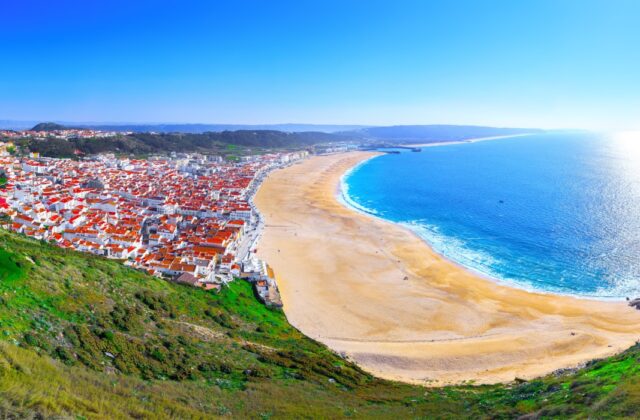
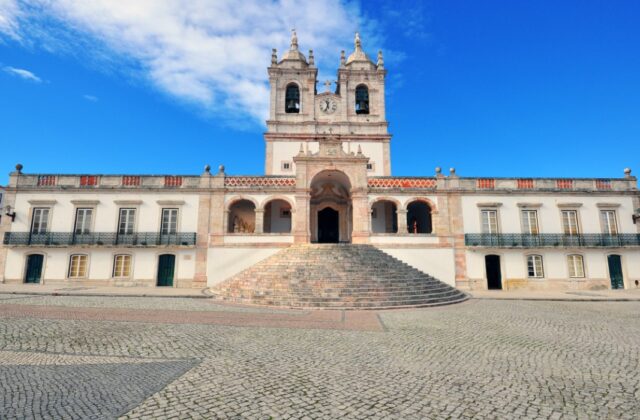
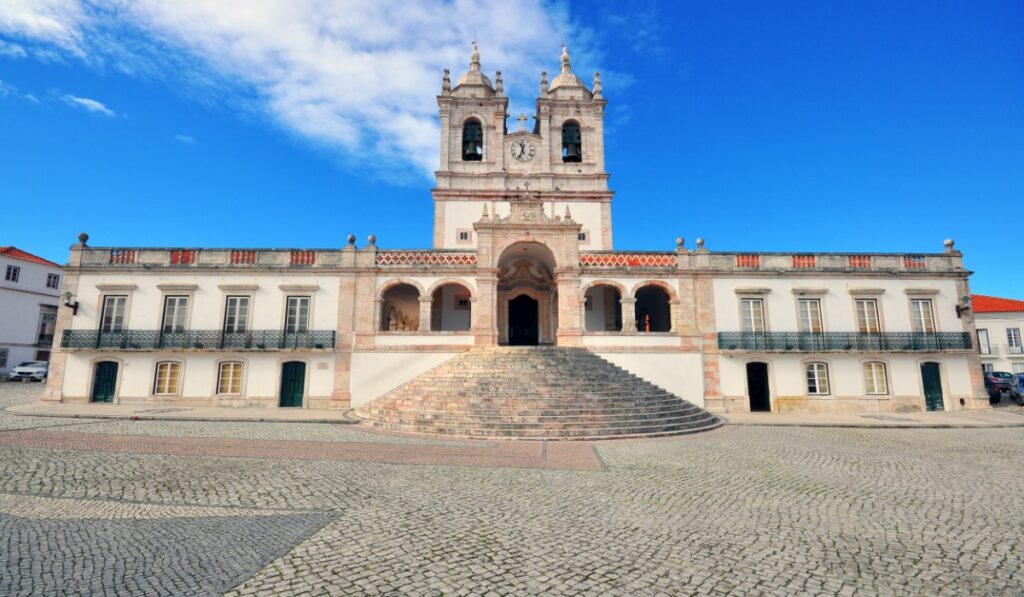
Spend your final night in Nazaré. At Sítio, the Miradouro do Suberco overlooks the town’s long beach from approximately 110 meters above sea level. The nearby Sanctuary of Our Lady of Nazaré adds historical context, connecting the headland with a pilgrimage tradition that long predates today’s surfing fame.
For another angle, continue toward the Fort of São Miguel Arcanjo above Praia do Norte, checking current access arrangements. The celebrated giant waves are seasonal and weather-dependent, most associated with autumn and winter swells, not a daily spectacle. Photograph the coastline regardless, then descend for dinner. Grilled sardines are especially appropriate in season; otherwise, ask which fish is fresh that day.
9. Sao Pedro de Moel, a quieter final coastal frame
On day six, head roughly half an hour north to São Pedro de Moel. Around Penedo da Saudade lighthouse, coastal viewpoints frame rocky shores and the Atlantic beyond. The lighthouse entered service in 1912. Its exterior and surroundings make a worthwhile stop without depending on interior visiting hours.
Finish with a walk through the village and lunch before returning toward Lisbon, allowing around two hours for the drive and extra time for traffic. If flying home, an airport-area overnight is more comfortable than rushing this final stretch. The route’s appeal is its rhythm: nine viewpoints, six days and enough breathing room to remember more than the photographs.
Plan your own day
Share your dates, group size and interests, and we will suggest a tailored plan with a local driver/guide.