Give Monsaraz and Alqueva four days rather than a hurried afternoon. This practical route connects medieval streets, pottery villages, lakeside pauses and dark skies, with time for the food and wine of the Alentejo.
Plan four days with Monsaraz at the centre
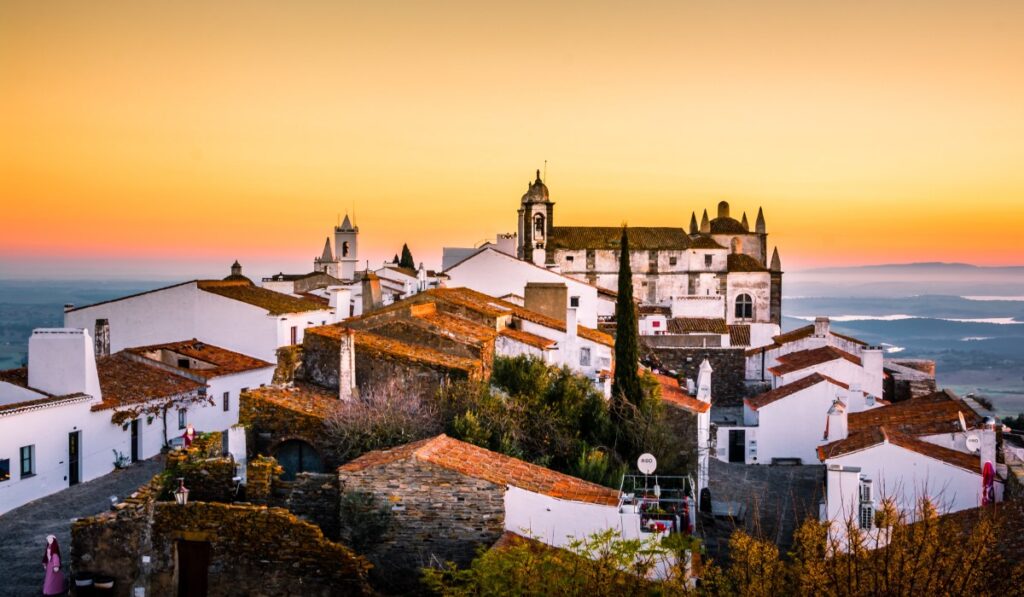
Monsaraz looks compact on a map, but its surroundings reward a longer stay. The walled village stands above the Guadiana valley and the broad waters of Alqueva, where olive groves, vineyards and scattered settlements make short distances feel like separate excursions. Allow four days from Lisbon, using the first for the journey through Évora, the next two for Monsaraz and the lake, and the last for a southern loop before returning.
Choose three nights either within Monsaraz or in the countryside near Reguengos de Monsaraz. Staying inside the walls puts quiet morning walks on your doorstep, although cobbles, slopes and parking outside the historic core need consideration. A rural base generally makes vehicle access easier. Lisbon to Monsaraz takes roughly two and a half to three hours by road without sightseeing stops, so do not treat Évora as an addition to an already crowded arrival day.
Portugal Magik can connect these places in Mercedes-Benz vehicles, with a local driver/guide shaping the day around the guests, whether that means longer lunches, shorter walks or time for photography. Keep the same base for the central nights rather than packing up each morning.
Day one: Break the journey in Évora
Leave Lisbon in the morning and make Évora your main stop before continuing east. Its UNESCO-listed historic centre deserves several hours rather than a quick photograph. Walk between the Roman Temple, the cathedral and Praça do Giraldo, choosing one interior visit instead of trying to cover every monument. The Chapel of Bones, beside the Church of São Francisco, is another option, but its human remains make it a personal choice rather than an essential family stop.
Have lunch in Évora, where açorda alentejana brings together bread, garlic, coriander and olive oil in a broth, often served with egg and sometimes fish. Alternatively, look for pork dishes or migas, a bread-based accompaniment with many local variations. Continue to Monsaraz in the afternoon, allowing about an hour for the drive. After checking in, make your first village walk deliberately short: find the main street, locate dinner and watch the light change over the plain.
Day two: Explore Monsaraz, then follow the pottery road
Start early inside Monsaraz, before the strongest sun reaches its exposed streets. Captured from Muslim rule by forces under Geraldo Sem Pavor in 1167, the settlement later became closely associated with the Order of Santiago. Its castle and defensive walls explain the strategic value of this rocky height near the Spanish frontier. Walk towards the castle enclosure for views across the reservoir, remembering that the water is a modern addition to an ancient landscape.
Around Largo Dom Nuno Álvares Pereira, look for the pillory and the Church of Nossa Senhora da Lagoa. If open, the former council and courtroom building preserves the striking medieval fresco usually known as The Good and Bad Judge. Monsaraz is best approached through these small details, not as a long checklist. Wear shoes with grip and expect uneven paving; exposed wall sections require particular care with children.
After lunch, descend towards the Menhir of Bulhoa, a prehistoric standing stone near the village of Outeiro, then continue to São Pedro do Corval. This is a working pottery village, with workshops producing painted plates, bowls and traditional earthenware. Opening hours vary, and not every workshop offers demonstrations. Browse at an unhurried pace before returning via Reguengos de Monsaraz, the practical service town for the surrounding countryside.
Browse our travel inspiration for ideas, or tell us what kind of day you have in mind.
Day three: Give Alqueva daylight and darkness
Dedicate this day to the lake rather than adding another distant town. Created by the Alqueva Dam, whose gates closed in 2002, the reservoir transformed this stretch of the Guadiana and supports irrigation, water supply and electricity generation. Its branching shoreline is enormous, so choose a manageable section. The Centro Náutico de Monsaraz and nearby river beach make a useful starting point for waterside time, with facilities and activities dependent on season and operating schedules.
In warm weather, plan swimming only in designated bathing areas and check current local conditions. Shade matters as much as water: summer afternoons can be intensely hot, and a long exposed walk is rarely the best use of them. Bring drinking water, sun protection and a change of clothes. Outside the bathing season, substitute a shoreline stroll and a leisurely lunch, leaving the afternoon flexible for a winery visit around Reguengos.
Keep the evening available for astronomy in Cumeada, near Reguengos de Monsaraz, where the Observatório do Lago Alqueva runs observing activities. Check the current programme and reserve ahead. The region is known for its dark skies, but cloud cover, moonlight and weather affect what you can see. Eat early enough to reach your session without rushing, and bring an extra layer even after a hot day.
Day four: Choose Mourão or a longer southern loop
For a gentle final morning, cross towards Mourão, whose castle offers another perspective on the lake and frontier landscape. Pair it with Luz, the village rebuilt when the reservoir submerged the old settlement. The Museu da Luz explains that relocation and the relationship between community, memory and landscape. Check opening days before making it central to the itinerary. This pairing gives the lake a human history beyond its scenery.
If you have a full final day and do not mind more driving, continue south towards Moura and the Alqueva Dam instead. Moura’s historic streets, castle area and olive oil traditions make it a worthwhile lunch stop. Treat this as an alternative to an extended Mourão and Luz visit, not another compulsory layer. For lunch, consider ensopado de borrego, a lamb stew commonly served over bread, or regional sheep’s cheese followed by a modest seasonal dish.
Before returning to Lisbon, leave room for the road rather than scheduling a late tasting. Winery appointments, museum closures and restaurant rest days should be checked in advance. Spring and autumn generally suit this route’s combination of walking and outdoor stops; in summer, move sightseeing earlier and protect the middle of the day. The strongest itinerary is not the one with the most villages, but the one that lets Monsaraz and Alqueva feel connected.
Plan your own day
Share your dates, group size and interests, and we will suggest a tailored plan with a local driver/guide.