Make Évora your base for five days linking Roman monuments, prehistoric stones, pottery villages and the open Alentejo countryside. This practical route keeps each excursion geographically focused, with time for regional food and unhurried afternoons.
Settle into one base and travel in different directions
Évora works particularly well for travelers who want to unpack once rather than change hotels every night. Lisbon is roughly 90 minutes to two hours away by road, depending on traffic and your starting point. Spend five days exploring the city and taking separate excursions west, east and northeast. The landscape becomes part of the trip: cork oaks, olive groves, vineyards and broad fields divided by low hills.
Choose accommodation inside the walls if evening walks and restaurants matter most, or just outside them for easier vehicle access. Historic streets include cobbles, narrow lanes and pedestrian areas, so check luggage arrangements before arrival. Portugal Magik can connect these outings in Mercedes-Benz vehicles, while a local driver/guide can shape the day around the guests, adjusting stops for walking ability, food interests or the afternoon heat.
Spring usually brings greener countryside and wildflowers; early autumn can offer warm days and vineyard activity. Summer requires a different rhythm, with outdoor sightseeing early and a proper midday break. Opening hours vary, especially at smaller monuments and producers, so confirm visits before fixing the sequence.
Day 1: Arrive from Lisbon and read Évora through its streets
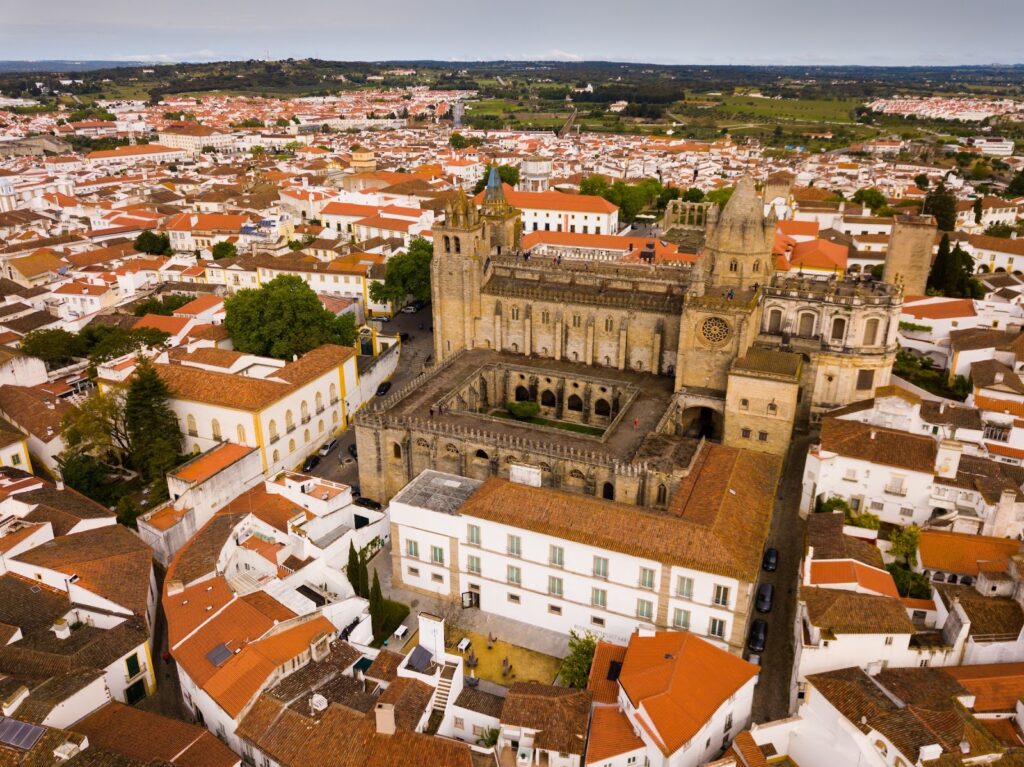
Travel directly to Évora rather than filling the arrival morning with detours. After dropping your bags, start at Praça do Giraldo, the arcaded square that provides an easy point of orientation. Walk uphill toward the cathedral and Roman temple. Évora’s historic centre is a UNESCO World Heritage Site, but its appeal is not confined to individual monuments: whitewashed houses, granite doorways and quiet lanes make the connections worthwhile.
The Roman temple dates to the first century AD. Often called the Temple of Diana, it is generally associated with the imperial cult rather than securely identified with that goddess. Nearby, the cathedral combines Romanesque and Gothic features. Its rooftop visit offers a useful introduction to the city’s relationship with the surrounding plains, although the stairs make it unsuitable for some visitors.
Keep the afternoon flexible. If you arrived early, visit the Church of São Francisco and its adjoining Chapel of Bones, created by Franciscan friars as a reflection on mortality. Otherwise, save them for the final morning. At dinner, try migas, a bread-based preparation often served with pork, and finish with sericaia, an egg-and-cinnamon dessert associated especially with Elvas.
Day 2: Head west for prehistoric stones and cork landscapes
Dedicate the morning to the countryside around Guadalupe and Valverde, west of Évora. The Almendres Cromlech is a major megalithic enclosure, with standing stones arranged over several prehistoric phases. It belongs to a much older landscape than Roman Évora. The nearby Almendres Menhir is a separate monument, so allow additional walking time rather than treating both as a single roadside stop.
Access deserves advance attention. Tracks, parking arrangements and walking conditions can change, and rain or extreme heat can affect the visit. Wear closed shoes and carry water. The Anta Grande do Zambujeiro, near Valverde, is another important prehistoric site, a large passage tomb. Ask about current access and conservation restrictions before including it, rather than assuming the chamber can be entered.
Return toward Évora for lunch and a quieter afternoon. This is a good day to understand the montado, the managed landscape of cork and holm oaks used for grazing and other agricultural activities. For lunch, look for açorda alentejana, traditionally made with bread, garlic, coriander, olive oil and hot water, often with a poached egg. It is quite different from the thicker bread dishes served elsewhere in Portugal.
Browse our travel inspiration for ideas, or tell us what kind of day you have in mind.
Day 3: Pair São Pedro do Corval with Monsaraz
Go east through Reguengos de Monsaraz toward São Pedro do Corval, a village known for its pottery workshops. Visit in the morning, when there is time to browse several establishments without rushing. Painted serving dishes and everyday earthenware make practical souvenirs, but ask about packing and intended use. Working schedules vary, so watching a potter at the wheel should be treated as a possibility, not an expectation.
Continue to Monsaraz for lunch and a walk through the fortified hilltop village. Its stone lanes and castle walls overlook the Guadiana landscape and the Alqueva reservoir, created by the Alqueva dam. The gradients and uneven paving deserve sensible footwear. In hot weather, shorten the midday walk and spend longer over lunch before exploring the viewpoints.
Add the nearby megalithic site of Xerez if archaeology interests you, or head toward the reservoir shore for a contrasting perspective on the hilltop. Avoid adding a lengthy winery visit as well unless you drop another stop. Return to Évora for the night; the direct journey from Monsaraz usually takes about an hour.
Day 4: Follow the marble towns toward Vila Viçosa
Use the northeastern route for Estremoz and Vila Viçosa. Start in Estremoz, where marble appears in buildings and ordinary street details, not just grand monuments. Walk the upper town around the castle, then descend toward Rossio Marquês de Pombal. If your visit falls on Saturday, the market can be a rewarding reason to spend longer here, with its mix of produce and other stalls.
Continue to Vila Viçosa for the Ducal Palace, closely associated with the House of Braganza. Check the visit schedule before departure because it can determine the day’s order. The palace and its broad forecourt provide a different historical emphasis from Évora’s Roman remains and Monsaraz’s defensive walls. Borba lies between the two towns and makes a sensible optional stop, but not at the expense of a rushed palace visit.
For lunch, consider ensopado de borrego, a lamb stew traditionally served over bread. If wine is a priority, replace one town with a prebooked producer visit rather than adding it to an already full afternoon.
Day 5: Leave room for Évora before returning to Lisbon
Spend your final morning on whatever Évora still holds: São Francisco, the Chapel of Bones, or the streets around the Água de Prata aqueduct, completed in the sixteenth century. Along parts of its urban course, houses occupy the spaces beneath the arches. This makes an engaging final walk without another long excursion.
Have an early lunch before returning to Lisbon. With a same-day flight, work backward from the airline’s recommended airport arrival time and allow for road delays. For an overnight stay in Lisbon, leave after lunch instead. Keeping this last day light gives the whole itinerary breathing room.
Plan your own day
Share your dates, group size and interests, and we will suggest a tailored plan with a local driver/guide.