Give Aveiro and Costa Nova three days, then add a fourth for porcelain heritage or lagoon birdlife. This practical route connects canal walks, Atlantic beaches and maritime museums without turning every afternoon into another transfer.
Start with three nights and a sensible arrival
Aveiro rewards travelers who stay after the canal-side day visitors leave. Plan three nights for a gentle arrival, a full coastal day and time for the city’s museums and salt-making landscape. Add a fourth night if you want to explore farther around the Ria de Aveiro. This is a coastal lagoon system rather than a river valley, and its channels, islands and wetlands explain much of the region’s character.
From Porto, allow roughly an hour by road in normal conditions; from Lisbon, the drive generally takes around two and a half to three hours before stops. Coimbra works well as a separate overnight before or after Aveiro. Trying to cover Coimbra’s university, Aveiro’s canals and Costa Nova in one day leaves little room for the places themselves.
Choose central Aveiro for restaurants and evening walks, or Costa Nova if beach time matters more than city convenience. Portugal Magik connects these stops in Mercedes-Benz vehicles, and a local driver/guide can shape the day around the guests, balancing walking, museum time and an unhurried lunch.
Day one: understand Aveiro from its canals
Begin at the Canal Central, then explore the streets around Praça do Peixe and the Beira Mar neighborhood. The canal fronts offer the familiar photographs, but the smaller streets reveal a city shaped by fishing, salt production and lagoon trade. Keep your first afternoon mostly on foot rather than repeatedly moving the vehicle between nearby sights.
A moliceiro ride provides an introduction to the waterways. These narrow, colorful boats traditionally gathered moliço, aquatic vegetation used to fertilize agricultural land. Today’s sightseeing trips are a different activity, so treat the ride as an introduction to the city rather than a recreation of working lagoon life. Check the route, departure arrangements and weather before committing.
Look for Art Nouveau façades around the center, especially Casa Major Pessoa, home to the Museu Arte Nova. Then stop for ovos moles, Aveiro’s protected confection of egg yolk and sugar, often enclosed in thin wafer shells shaped like fish or seashells. Buy a small portion first: their concentrated sweetness makes them better suited to a coffee break than a large dessert after lunch.
Day two: Costa Nova first, Barra afterwards
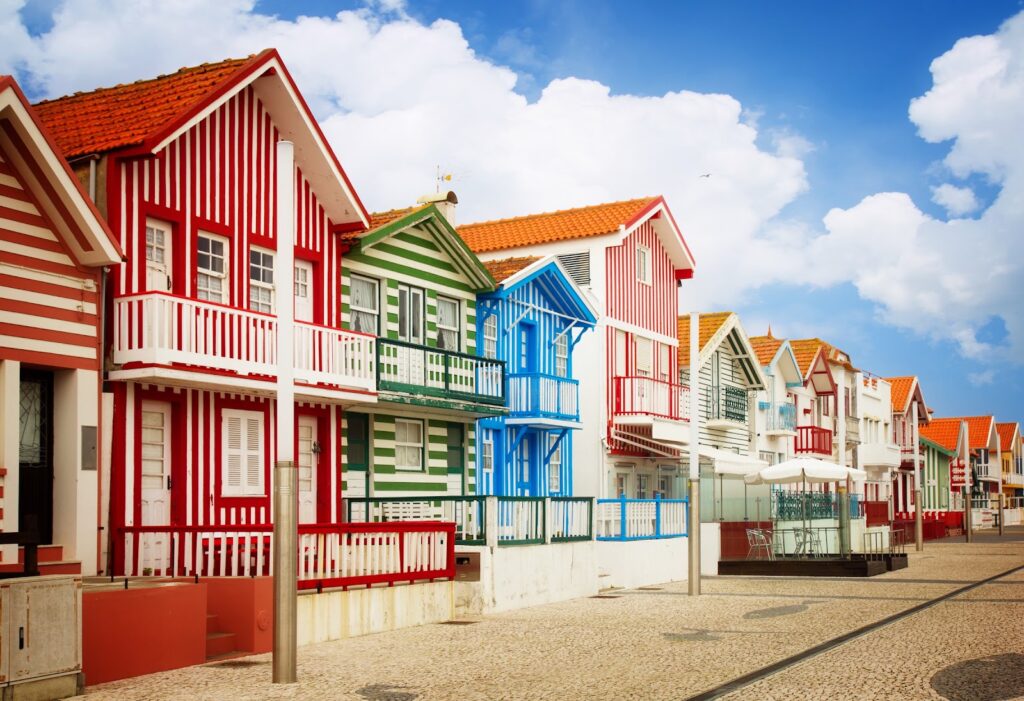
Set aside the next day for the coast, usually around twenty to thirty minutes from central Aveiro by road, depending on traffic. Start in Costa Nova along Avenida José Estêvão, where striped houses face the lagoon. The area’s palheiros began as practical buildings associated with fishing, including storage for equipment; many later became homes and holiday accommodation. The waterfront is a lived-in neighborhood, so photograph façades without blocking doorways.
Cross towards the Atlantic for a walk on designated beach access routes and boardwalks. The ocean side feels quite different from the sheltered lagoon frontage, particularly when the wind rises. Bring a layer even in warmer months, and follow beach flags and lifeguard advice if swimming is part of the plan.
For lunch, consider grilled fish, a seafood rice dish or caldeirada, the fish stew found in different forms along Portugal’s coast. Ask what is available that day rather than planning around a particular catch. Continue to nearby Praia da Barra for its prominent lighthouse, which entered service in 1893. Interior access is scheduled rather than continuous, so confirm current arrangements if climbing it matters. Otherwise, the beach and harbor entrance make a worthwhile final stop.
Browse our travel inspiration for ideas, or tell us what kind of day you have in mind.
Day three: pair sacred art with the salt landscape
Use your third morning for Museu de Aveiro / Santa Joana, housed in the former Convent of Jesus. Princess Joana, daughter of King Afonso V, entered this religious community in the fifteenth century and became closely associated with Aveiro. The church, tomb and collections give the city historical depth beyond its colorful boats. Check opening days before fixing the sequence of your stay.
After lunch, turn to the salt pans on the city’s western side. The Ecomuseu Marinha da Troncalhada introduces traditional salt production and the landscape that sustained it. Visible work depends on season and conditions, with warmer, drier months generally offering a better chance of seeing the production cycle. Paths can be exposed, so bring water, sun protection and shoes suitable for uneven ground.
Leave the late afternoon open for another neighborhood walk or a café stop rather than adding a distant excursion. If you enjoy regional food, ask about eel preparations such as caldeirada de enguias, a lagoon specialty whose availability varies by restaurant. Travelers who prefer something simpler will also find straightforward fish and meat dishes.
Add a fourth day for porcelain or maritime history
For a heritage-focused extension, travel south to Ílhavo. The Museu Marítimo de Ílhavo explores the municipality’s relationship with the sea, including Portuguese cod-fishing traditions, and includes a cod aquarium. It provides useful context for bacalhau, which became central to Portuguese food through preservation and long-distance fishing rather than local lagoon catches.
Continue to Vista Alegre, the porcelain manufacturing settlement founded in 1824. Its museum and surrounding buildings suit travelers interested in design, industrial history and decorative arts. Pairing Ílhavo and Vista Alegre makes geographical sense and allows a proper lunch between visits. Confirm opening hours for both before departure, especially around holidays.
If nature appeals more, use the extra day for the São Jacinto Dunes Nature Reserve instead. Check current visitor access and trail arrangements, and allow time for the journey around the lagoon or a suitable ferry connection. Do not squeeze this into the same afternoon as both museums: the appeal lies in walking slowly through a protected coastal environment.
Keep the itinerary flexible around weather and onward travel
In summer, visit Costa Nova earlier to ease parking pressure and leave more time for the beach. In cooler or unsettled weather, swap the coastal day with museums, keeping the clearest forecast for outdoor walks. Canal trips and exposed lagoon paths are more enjoyable when conditions cooperate.
On departure, continue north towards Porto or south towards Coimbra without retracing the coast unnecessarily. The best version of this stay is not the one with the most stops. It is the one that gives Aveiro’s waterways, Costa Nova’s two shorelines and the region’s working history enough time to feel distinct.
Plan your own day
Share your dates, group size and interests, and we will suggest a tailored plan with a local driver/guide.