Plan a balanced multi-day journey through central Portugal, combining the spiritual atmosphere of Fatima with the magnificent Gothic masonry of Batalha and nearby medieval landmarks.
The Strategic Crossroads of Central Portugal
Travelers mapping a route between Lisbon and Porto often treat central Portugal as a quick highway drive. That approach leaves some of the nation’s most profound historical milestones unexplored. The region encompassing Fatima and Batalha represents both the spiritual core and the royal turning points of the Portuguese kingdom. Planning three to four days in this corridor allows you to appreciate the stark contrast between modern devotion and medieval stonecraft without rushing.
Fatima lies on a limestone plateau surrounded by olive groves and low stone walls, while Batalha rests just twenty minutes to the west in a sheltered valley. Because these landmarks sit so close together, they form a natural hub for exploring central Estremadura and the western edge of the Ribatejo. Traveling with a private driver in a comfortable Mercedes-Benz vehicle removes the stress of navigating rural intersections, regional parking regulations, and toll gates, letting you focus entirely on the landscape and history.
Day One: The Sanctuary of Our Lady of Fatima
Begin your route by establishing an unhurried morning in Fatima. The Sanctuary of Our Lady of Fatima is vast, anchored by the Neo-Baroque Basilica of Our Lady of the Rosary on one end and the modern Basilica of the Most Holy Trinity on the other. At the center of the esplanade stands the Chapel of the Apparitions, marking the site where three shepherd children, Lucia dos Santos and Francisco and Jacinta Marto, reported Marian visions between May and October of 1917.
To fully understand the context of the sanctuary, allocate time in the afternoon to visit Aljustrel, the tiny hamlet two kilometers away where the children lived. The original stone cottages with their low doorways, simple hearths, and preserved furniture illustrate the austere rural life of early twentieth-century Portugal. Walking the shaded path of the Via Sacra to Valinhos provides quiet space for reflection before returning to the sanctuary for the evening candlelight procession, which takes place nightly between spring and autumn.
Day Two: Gothic Majesty and Royal Memory at Batalha
A short drive west brings you to the Monastery of Santa Maria da Vitoria in Batalha. King John I ordered the construction of this Dominican monastery to fulfill a vow made before the crucial Battle of Aljubarrota in August 1385, where Portuguese forces secured national independence against Castilian claims. The complex is an architectural triumph, blending Flamboyant Gothic lines with early Manueline maritime motifs carved directly into local golden limestone.
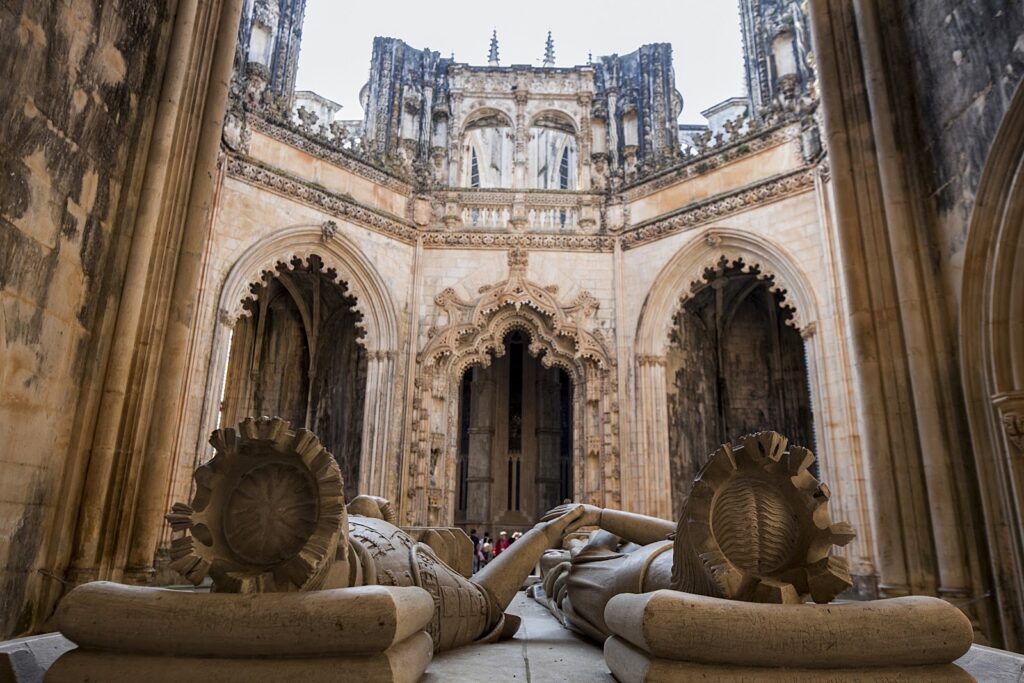
Inside, the high, light-filled nave gives way to the Founder’s Chapel, where King John I and his English queen, Philippa of Lancaster, rest hand in hand atop a joint carved sarcophagus. Their sons, including Prince Henry the Navigator, lie nearby in recessed wall tombs. Do not miss the Unfinished Chapels, commissioned by King Edward. Left open to the sky after master stonemasons were redirected to the Jeronimos Monastery in Lisbon, their soaring octagonal pillars and deeply undercut doorways show Manueline decorative carving at its peak.
Browse our travel inspiration for ideas, or tell us what kind of day you have in mind.
Regional Tables: Flavors of the Limestone Uplands
Exploring these monuments works up an appetite for hearty regional dishes. The cuisine around Batalha and the nearby Serra de Aire e Candeeiros depends on wood-fired cooking and local agriculture. A favorite lunch specialty is leitao assado, crisp-skinned suckling pig roasted with garlic and black pepper, or cabrito assado no forno, tender kid goat roasted in clay pots over vine prunings.
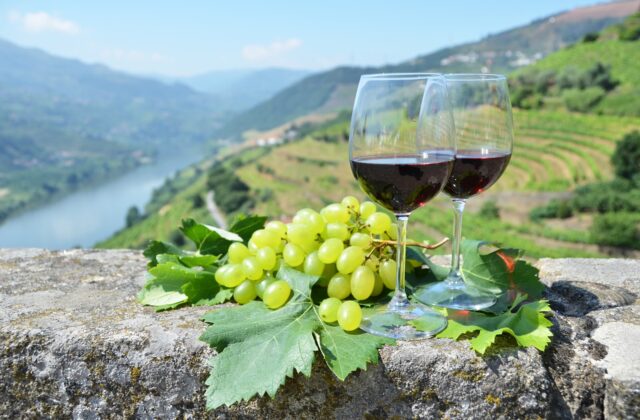
When you sit down at a traditional taberna, start with local Serra de Sico sheep and goat cheeses served with crusty sourdough bread. Pair the meal with bright, mineral white wines or structured reds from the surrounding Encostas d’Aire wine region. For a sweet finish, sample cavacas, crisp sugar-glazed pastries originating from Caldas da Rainha, or brisas do Lis, small almond and egg yolk cakes that highlight the monastic confectionery traditions of nearby Leiria.
Day Three: Expanding the Circuit to Alcobaca and Porto de Mos
By extending your central itinerary by another day, you can weave Batalha and Fatima into a broader historical narrative. Head south to Alcobaca to walk through the Monastery of Santa Maria, Portugal’s grandest Cistercian abbey, founded by King Afonso Henriques in 1153. Here, in the quiet transept, sit the facing tombs of King Pedro I and Ines de Castro, masterpieces of fourteenth-century funerary sculpture depicting their tragic love story.
On the return route through the green hills of the natural park, pause beneath the distinctive green-tiled turrets of Porto de Mos Castle. The fortress stands watch over the plain where the Battle of Aljubarrota was fought, offering panoramic views across the olive terraces. Having a dedicated local driver and guide allows you to shape the schedule around museum hours, light conditions, and personal energy levels, turning what could be an exhausting day into a seamless cultural exploration.
Practical Planning for an Unhurried Journey
When timing a multi-day trip centered on Fatima and Batalha, spring and autumn offer the most pleasant conditions. Midsummer temperatures in the interior valleys can climb significantly, while winter brings rain off the Atlantic. If you wish to witness major religious observances in Fatima, plan around the thirteenth day of any month between May and October, particularly May and October themselves. If your focus is quiet exploration, consider visiting during mid-week periods.
Footwear matters across these sites; both the polished paving stones of Fatima’s esplanade and the ancient flagstones of Batalha’s cloisters require comfortable walking shoes with good grip. By connecting these monumental sites into a single, cohesive route with Portugal Magik, you gain a deep appreciation for the deep spiritual currents and royal ambitions that defined the birth and survival of Portugal.
Plan your own day
Share your dates, group size and interests, and we will suggest a tailored plan with a local driver/guide.