Discover how to connect the Roman monuments of Evora with ancient megaliths, fortified border bastions, and golden plains on a seamless multi-day journey through the Alentejo.
Setting the Stage in Evora
The vast interior south of the Tagus River reveals an entirely different Portugal from the coastal capitals. Here, golden wheat fields stretch toward distant horizons, punctuated by ancient olive trees and cork oaks. At the center of this rural landscape stands Evora, a UNESCO World Heritage city enclosed by centuries of defensive stone. Basing yourself here allows you to unpack once while taking in Roman, Moorish, and medieval history without rushing.
Your first day is best dedicated entirely to Evora itself. Begin at the Praça do Giraldo, the central square lined with arcaded buildings and vibrant cafes, where locals gather for strong espresso and morning pastries. From the square, narrow cobblestone alleys wind gently uphill toward the highest point of the town. Here, you reach the Roman Temple, often called the Temple of Diana, dating back to the first century. Its Corinthian columns stand remarkably intact against the bright blue sky.
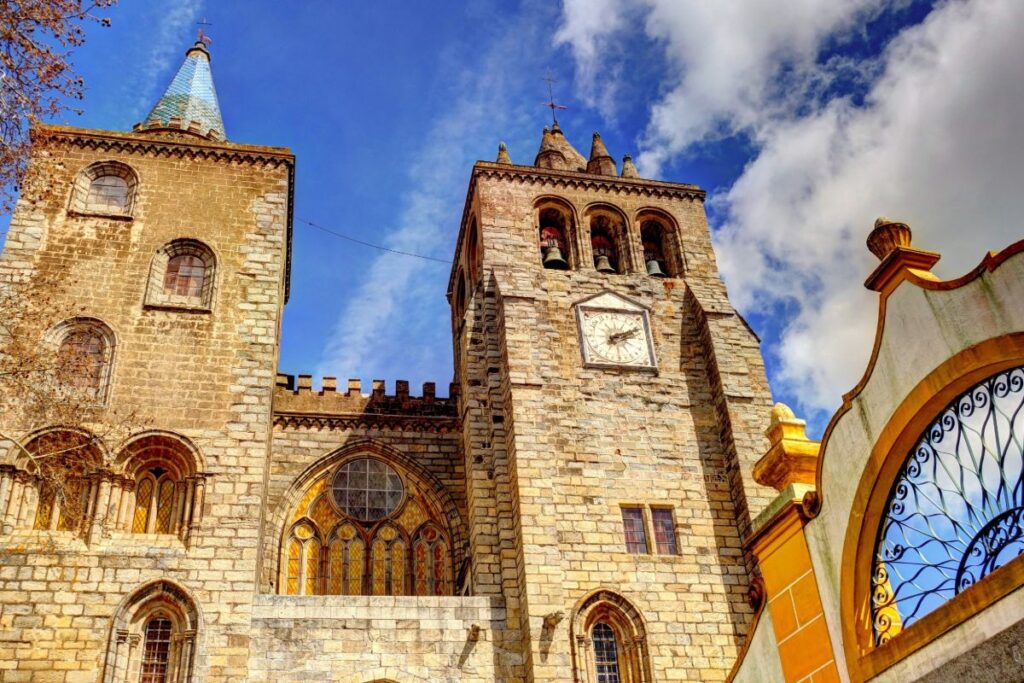
A short stroll leads to the Cathedral of Evora, known locally as the Se. Built between 1280 and 1340, this fortified Gothic structure features a rose granite exterior that resembles a fortress. Climb to the roof for sweeping panoramas across the red-tile rooftops and into the surrounding plains. For lunch, settle into an authentic tavern to taste carne de porco a alentejana, a traditional dish combining marinated pork, tender clams, and coriander in a savory garlic broth.
Convent Secrets and Ancient Megaliths
Begin your second morning at the Church of Saint Francis, home to the famous Capela dos Ossos, or Chapel of Bones. Constructed by Franciscan monks in the seventeenth century, the chapel walls and pillars are covered with thousands of human bones and skulls. The somber inscription above the entryway, translated as ‘We bones that are here, await yours,’ offers a striking reflection on mortality that leaves a lasting impression.
In the afternoon, leave the city walls behind to explore the mysterious prehistory of the region. A short drive westward leads into the oak woodlands of Guadalupe, where the Almendres Cromlech rests. This megalithic complex of roughly ninety-five granite monoliths predates Stonehenge by several centuries, arranged in circular alignments that served ceremonial and astronomical purposes for ancient farming communities.
Traveling between these rural sites is effortless when touring in a Mercedes-Benz vehicle with a knowledgeable driver who understands the layout of country backroads. A dedicated local driver guide can easily shape the day around your pace, perhaps adding an impromptu stop at an artisanal olive oil press or arranging a quiet tasting of robust regional red wines crafted from Alicante Bouschet and Trincadeira grapes.
Medieval Heights of Monsaraz and the Alqueva Shoreline
On day three, point your compass eastward toward the Spanish frontier. The road winds past whitewashed hamlets and sleeping estates toward Monsaraz, a fortified village perched high above the surrounding landscape. Monsaraz feels suspended in time, with its traffic-free streets paved in schist stone, lime-washed houses adorned with bougainvillea, and a fourteenth-century castle commanding panoramic border views.
From the ramparts of Monsaraz Castle, look down over the vast expanse of the Alqueva reservoir, the largest artificial lake in Western Europe. After wandering through quiet handicraft shops selling handwoven wool blankets, enjoy a leisurely lunch overlooking the water. Savor sopa de caçao, a comforting dogfish soup infused with garlic, vinegar, and fragrant pennyroyal, accompanied by crusty Alentejo bread.
Descend the hill in the afternoon to visit the lakeside village of Sao Pedro do Corval, recognized as one of Portugal’s largest traditional pottery centers. Here, potters still sit at manual wheels, shaping terracotta clay into jugs, platters, and decorative bowls painted with olive branches and rural scenes. You can watch artisans paint intricate patterns by hand and select ceramic keepsakes directly from workshop studios.
Browse our travel inspiration for ideas, or tell us what kind of day you have in mind.
Marble Towns and Royal Bastions
Dedicate your final day to the northern reaches of the district, where the terrain shifts toward the famous marble triangle. Head first to Vila Viçosa, often called the Princess of the Alentejo. The town is built almost entirely from locally quarried stone; even sidewalks, door frames, and church facades gleam with polished white and pink marble.
The centerpiece of Vila Viçosa is the Ducal Palace, the ancestral home of the House of Bragança, the royal dynasty that ruled Portugal from 1640 until the abolition of the monarchy in 1910. Walk through grand galleries lined with tapestries, historic weaponry, and preserved royal furnishings that give a detailed look into country life among Portuguese monarchs.
From Vila Viçosa, continue a short distance north to Estremoz. This proud town is split between an energetic lower district surrounding the sprawling Rossio market square and a fortified upper precinct crowning the hill. Explore the thirteenth-century keep, constructed from solid white marble, and pause at a local pastry shop for a slice of sericaia, a light baked custard flavored with cinnamon and served alongside sweet preserved Elvas plums.
Practical Planning for the Alentejo Plains
Spring and autumn are the ideal seasons to explore Evora and its neighboring towns. April and May bring fields carpeted with wildflowers and comfortable daytime temperatures, while October and November offer grape and olive harvests beneath crisp, sunlit skies. Summer months bring intense interior heat, requiring early morning outings and slow, shaded afternoons.
Distances between historical landmarks in this region are moderate, but navigating unmarked agricultural tracks and finding parking outside medieval gates can sometimes consume valuable vacation time. Working with Portugal Magik simplifies every connection, pairing the comfort of private Mercedes-Benz touring with seamless navigation. Having a local driver guide to share the deep heritage of the region ensures your time among the cork forests and castle walls is restful, enriching, and tailored to your interests.
Plan your own day
Share your dates, group size and interests, and we will suggest a tailored plan with a local driver/guide.