Discover the most rewarding day excursions from Lisbon and see how to connect royal palaces, coastal cliffs, and historic vineyards across a seamless multi day itinerary.
1. Sintra and the Romanticist Estates of the Serra
Sintra sits just forty minutes west of Lisbon, yet it transports travelers into an entirely different microclimate of misty pine forests and whimsical royal architecture. American travelers often compare it favorably to royal sites in France or Germany because of the sheer concentration of historic estates within a few square miles. The colorful terraces of Pena Palace provide sweeping views out toward the Atlantic Ocean, while nearby Quinta da Regaleira captivates visitors with its Gothic initiation well and subterranean stone tunnels.
Visiting Sintra comfortably requires navigating steep, winding roads and restricted historic center traffic. Having a knowledgeable local driver and guide allows you to step directly into palace grounds without hunting for scarce parking or dealing with crowded public shuttle buses. A morning exploring the regal halls pairs naturally with a quiet lunch in the old town, tasting travesseiros, the warm almond and egg cream pastries created at Piriquita since 1862.
2. Cascais and the Dramatic Coastal Drive of Cabo da Roca
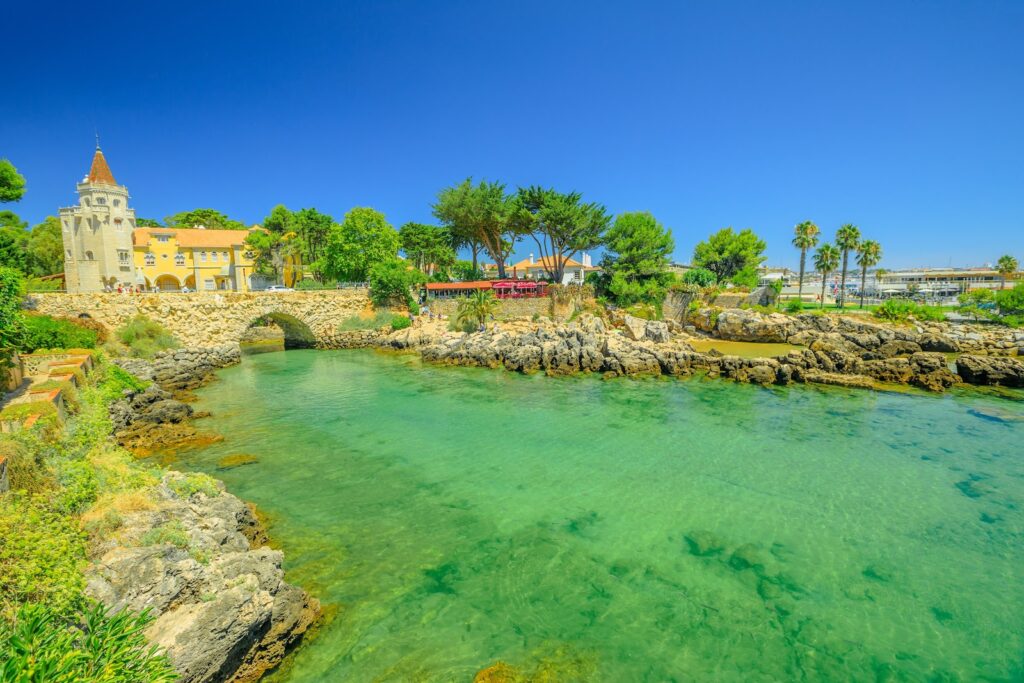
Cascais offers a refined seaside atmosphere that Americans who appreciate towns like Carmel or Newport immediately warm to. Once a humble fishing village, it gained international fame in the nineteenth century when the Portuguese royal family chose it as their summer residence. The town center features immaculate pedestrian streets paved with black and white stone mosaics, small sandy bays, and an active harbor where fishermen still mend their nets next to modern yachts.
This excursion combines easily with an afternoon run past the towering cliffs of Cabo da Roca, the westernmost point of continental Europe. The scenic coastal road hugs the windswept dunes of Guincho Beach, a renowned destination for world class surfing. Along the way, stopping for lunch at a coastal marisqueira allows you to sample fresh sea bass baked in sea salt, paired with a chilled glass of crisp local white wine, all while overlooking the crashing Atlantic waves.
3. Evora and the Sunlit Plains of the Alentejo
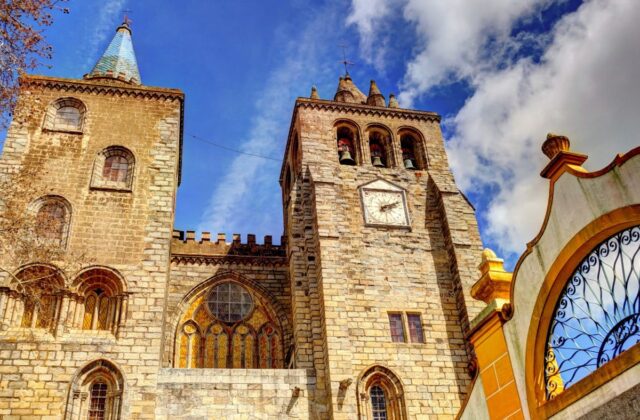
Located ninety minutes east of the capital, Evora provides a completely different cultural landscape defined by golden plains, cork oak groves, and whitewashed houses trimmed in bold yellow. American visitors love Evora because it brings thousands of years of layered history into a walkable, compact historic core. You can stand before the remarkably preserved first century Roman Temple of Diana, admire the granite Gothic towers of the Cathedral, and step inside the intriguing sixteenth century Chapel of Bones at the Church of Saint Francis.
The surrounding Alentejo region produces some of Portugal’s finest full bodied red wines made from grapes like Alicante Bouschet and Trincadeira. A day trip here fits neatly into a broader regional itinerary, allowing travelers to enjoy an authentic regional lunch of tender Iberian black pork with migas before visiting a traditional family winery. Traveling across the wide open Alentejo plains without the stress of navigating rural roads makes the journey remarkably relaxed.
Browse our travel inspiration for ideas, or tell us what kind of day you have in mind.
4. Obidos and the Medieval Western Ramparts
Obidos is a picture perfect walled town that has preserved its medieval charm thanks to centuries of royal patronage. Traditionally gifted by Portuguese kings to their queens on their wedding day, the village is enclosed by intact stone fortifications that date back to the thirteenth century. Americans love the ease of exploring this town on foot, walking past whitewashed houses decorated with vibrant bougainvillea, tiny artisan workshops, and small bookshops tucked into ancient stone arches.
While walking Rua Direita, the town’s central cobblestone spine, travelers can stop to sample the famous regional sour cherry liqueur, ginjinha, traditionally served in small edible dark chocolate cups. Obidos takes roughly two hours to explore thoroughly, which makes it an ideal morning stop before continuing to nearby coastal villages or historic monasteries, creating a balanced and varied day outside the capital.
5. Nazare and the Historic Fishing Traditions of Sitio
Nazare is famous around the world for the colossal winter waves generated by its deep underwater canyon, attracting the world’s most daring big wave surfers. Yet beyond the adrenaline of Praia do Norte, the town offers deep cultural heritage that resonates strongly with American visitors. In the lower village, you can still see local women drying horse mackerel and sardines on wooden racks along the broad sandy beach, wearing traditional seven layered wool skirts that tell centuries of maritime history.
Taking in the view from the Sitio promontory, standing three hundred feet above the beach, reveals a panoramic sweep of the silver coast that is difficult to match anywhere in southern Europe. A local driver and guide can shape the day around the guests, pivoting effortlessly between wave watching at the historic lighthouse fort and reserving a table for a bubbling pot of caldeirada, Portugal’s aromatic fish and potato stew, at a family run seaside tavern.
6. Azeitão and the Artisan Coast of the Setubal Peninsula
Just south of the 25 de Abril Bridge lies the Setubal Peninsula, a region known for green mountain ridges, world class tile craftsmanship, and distinguished dessert wines. The town of Vila Nogueira de Azeitão serves as the heart of this countryside escape. Here, visitors can tour Quinta da Bacalhoa, an estate that seamlessly blends historic Renaissance gardens, contemporary sculpture collections, and heritage vineyards that produce celebrated Cabernet Sauvignon blends.
The area is also world famous for its culinary delicacies, particularly the creamy sheep milk cheese known as Queijo de Azeitão, and the sweet, amber colored Moscatel de Setubal wines. A short drive down into the adjacent fishing port of Setubal reveals some of the best grilled sardines and cuttlefish in the country. Because English is spoken widely throughout the estates, American guests can easily converse with fifth generation winemakers and ceramic painters crafting hand painted azulejos.
7. Mafra and the Coastal Haven of Ericeira
A forty minute drive northwest of Lisbon brings travelers to the National Palace of Mafra, one of the most monumental baroque complexes in Europe. Built in the eighteenth century with gold imported from Brazil, the palace houses over a thousand rooms, two massive carillons with ninety eight bells, and a breathtaking rococo library lined with over thirty thousand leather bound volumes preserved by a resident colony of bats. American history enthusiasts often find the scale of Mafra equal to Versailles, but with far fewer crowds.
After touring the grand palace halls, a short fifteen minute drive west leads to the Atlantic seaside town of Ericeira. Recognized as a World Surfing Reserve, Ericeira combines traditional maritime life with a lively cafe culture. Cobblestone alleyways lined with blue trimmed cottages wind toward dramatic ocean overlooks where you can sit with a plate of fresh goose barnacles or grilled sea bream, watching Atlantic rollers break against the harbor breakwater.
8. Tomar and the Fortress of the Knights Templar
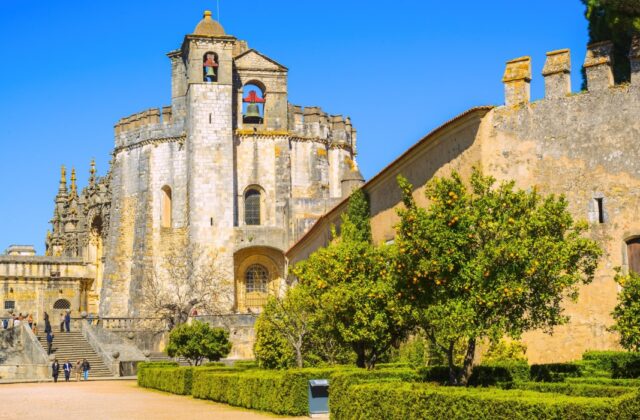
Tomar sits seventy five miles northeast of Lisbon along the peaceful banks of the Nabão River. It is home to the Convent of Christ, a UNESCO World Heritage site that originally served as the stronghold for the Knights Templar in the twelfth century. American travelers find Tomar endlessly fascinating for its rich military history and its stunning architectural progression, culminating in the famous Chapterhouse Window, a supreme masterpiece of intricate Portuguese Manueline stone carving depicting ropes, coral, and maritime anchors.
Combining Tomar with nearby sites creates an unforgettable day of heritage and scenery. On the drive back toward Lisbon, you can make a scenic stop at Almourol Castle, an evocative fortress built on a small rocky islet in the middle of the Tagus River, accessible by a quick wooden boat crossing. It provides a thrilling glimpse into Portugal’s founding years, offering the depth and grandeur of European history in a single day.
Plan your own day
Share your dates, group size and interests, and we will suggest a tailored plan with a local driver/guide.