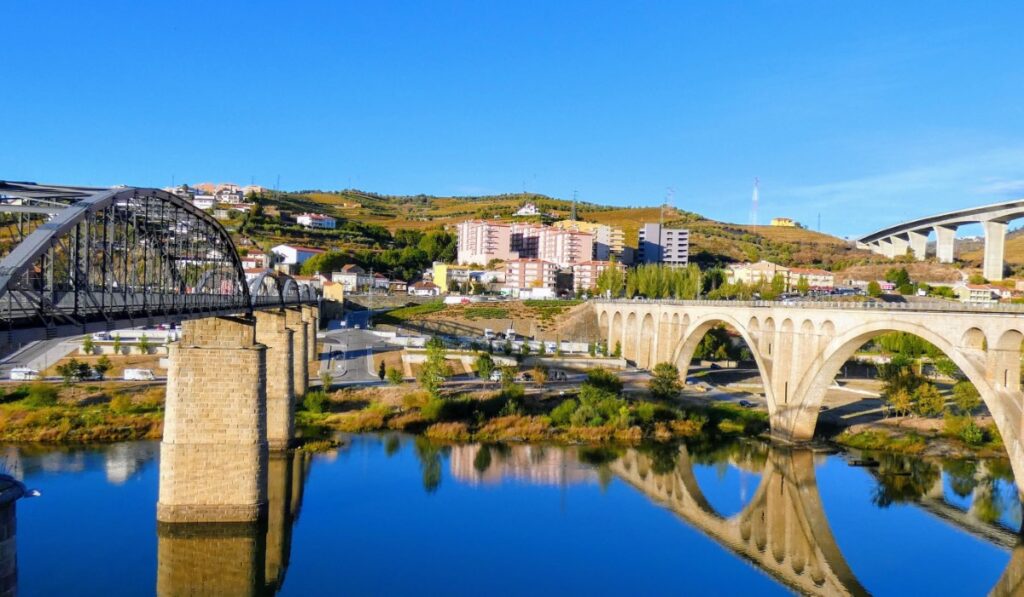
Give the Douro Valley four days and its wine estates become part of a wider journey through riverside towns, hillside villages and northern Portuguese food. This route connects Peso da Régua, Lamego and Pinhão without turning every day into a succession of tastings.
Start with the map, then choose your base
The Douro rewards a slower approach than a single excursion from Porto allows. Vineyards climb steep slopes, roads bend around tributary valleys, and two places that look close on a map may require a surprisingly winding drive. For a first visit, plan four days with three nights in the region. Spend the opening day around Peso da Régua, give Lamego its own morning, then move east towards Pinhão for vineyard visits and hilltop views.
Choose one base near Régua or Pinhão if unpacking once matters most. Régua works well for the museum, Lamego and western estates; Pinhão puts you closer to the central vineyard landscape. Alternatively, spend one night near Régua and two around Pinhão. Portugal Magik offers private driver and guided touring services in Mercedes-Benz vehicles, and a local driver/guide can shape the day around the guests, balancing wine appointments with walking, food and time simply looking across the valley.
Day one: Porto to Régua, with time to understand the wine
Leave Porto after breakfast and keep the first day deliberately light. The direct drive to Peso da Régua generally takes around an hour and a half, although traffic, your starting point and stops affect the journey. Begin at the Museu do Douro, housed in the former headquarters of the region’s wine company. It provides useful context for the terraces, river transport and labour behind the landscape you will spend the next few days exploring.
The Douro’s demarcation dates to 1756, when the crown established the Companhia Geral da Agricultura das Vinhas do Alto Douro under the Marquis of Pombal. The Alto Douro Wine Region became a UNESCO World Heritage Site in 2001. Those dates tell different stories: one concerns the regulation of wine production and trade, while the other recognises a cultural landscape shaped by generations of growers.
After lunch in Régua, book one estate rather than attempting several. Quinta do Vallado, near town, offers a useful introduction to both Douro wines and Port, subject to its current visitor programme. Reserve ahead and leave room for questions. At dinner, look for cabrito assado, roast kid often served with potatoes, or a seasonal vegetable soup followed by a lighter dish if lunch was substantial.
Day two: Lamego before the river road to Pinhão
Head south to Lamego in the morning, before the day becomes hot. The Santuário de Nossa Senhora dos Remédios stands above town, approached by a monumental staircase with tiled panels and ornamental landings. Walking the full staircase is optional: arriving near the sanctuary by road and exploring selected sections makes the visit easier for anyone avoiding a long climb. Back in the centre, visit the cathedral, whose architecture reflects several periods, including a surviving medieval tower.
Lamego is also a good place to pause over presunto and bola de Lamego, a savoury bread commonly filled with meat. Treat these as a shared lunch or snack rather than assuming another formal meal is necessary. Check attraction opening hours before fixing the day’s order, particularly if a museum visit is important to you.
In the afternoon, return towards Régua and follow the N222 east to Pinhão. This is a scenic drive, not a stretch to rush between appointments. Near Folgosa, the river and vineyard slopes make a natural break where parking is safe and permitted. Reach Pinhão with enough daylight to see the railway station’s azulejo panels, which depict vineyard work and the transport of wine.
Browse our travel inspiration for ideas, or tell us what kind of day you have in mind.
Day three: Pinhão estates and the view from Casal de Loivos
Use Pinhão as the centre of your main wine day. Quinta do Bomfim, close to the station, is a practical starting point for learning about Port production and the Symington family’s work in the region. Book the specific visit you want rather than relying on arrival without a reservation. Tour formats, tasting selections and vineyard access can change with the season and estate operations.
Keep lunch unhurried, then decide whether a second tasting genuinely adds something. Quinta de la Rosa, just outside Pinhão, is another established producer with visitor options. Ask about dry Douro wines as well as Port: reds often feature Touriga Nacional, Touriga Franca and Tinta Roriz, while regional whites provide a different perspective on the valley. Two properly spaced appointments are usually more rewarding than three rushed ones.
Finish at the viewpoint in Casal de Loivos, above Pinhão, if visibility is good. The river bend, railway and patterned slopes make the geography easier to understand. Access involves narrow village roads, so allow time rather than squeezing it between bookings. Visitors not interested in a second tasting can use the afternoon for this outing and a quiet riverside pause instead.
Day four: A village morning before returning to Porto
For the final morning, choose Favaios if you want a different expression of Douro life. Set on a plateau above the river, the village is associated with Moscatel wine and bread baked in wood-fired ovens. The Núcleo Museológico de Favaios, Pão e Vinho explores both traditions. Check current opening arrangements, and book any producer visit separately rather than assuming the museum includes a tasting.
Have lunch nearby before returning to Porto, allowing a generous driving window and extra time for an airport connection. If your flight leaves that afternoon, skip the village detour and travel directly from your accommodation. Four days should create breathing space, not end with a race. For travellers with another night available, the eastern Douro deserves a separate extension rather than a hurried addition to this departure day.
Choose the season and leave room at the table
Spring brings greener slopes and generally comfortable sightseeing weather; summer can be intensely hot, especially away from the river. Harvest activity commonly falls in September, sometimes starting earlier or continuing later according to conditions. It is a working season, so never assume access to picking or grape treading. Autumn colour arrives later, while winter brings shorter days and potentially reduced visitor schedules.
Reserve estate visits and key meals ahead, but leave gaps between them. Carry water, sun protection and shoes with good grip for uneven paths. Alongside wine, seek regional olive oil, local cheeses and dishes such as bacalhau or roast meats. Most importantly, make the itinerary serve the stay: one memorable vineyard visit, a village lunch and an open afternoon can be a complete Douro day.
Plan your own day
Share your dates, group size and interests, and we will suggest a tailored plan with a local driver/guide.