Give Fatima and Batalha time of their own, then connect them with Alcobaca, Nazare and Obidos. This four-day plan from Lisbon balances pilgrimage sites, medieval architecture and unhurried meals.
Set the route before choosing your overnight stops
Fatima and Batalha sit close enough for a combined day trip, but they reward different rhythms. Fatima is best approached with time for reflection, services or a walk beyond the main sanctuary. Batalha asks you to slow down over carved stone, royal tombs and the details of a building developed across generations. Four days let you include both without reducing either to a photograph stop.
From Lisbon, travel first to Fatima, continue to Batalha on the second day, then link Alcobaca and Nazare before returning through Obidos. Fatima is roughly 90 minutes from Lisbon by road in normal conditions, while Batalha is about half an hour from Fatima. Treat these as planning estimates, with additional time for traffic, breaks and reaching your accommodation.
For the fewest hotel changes, spend the first two nights in Fatima or Batalha and the third in Nazare. Choose Fatima if attending evening worship matters most; choose Batalha if you prefer a compact town setting beside the monastery. Portugal Magik offers private driver and guided touring in Mercedes-Benz vehicles, making this route practical without collecting a rental car.
Day one: Arrive in Fatima with an open afternoon
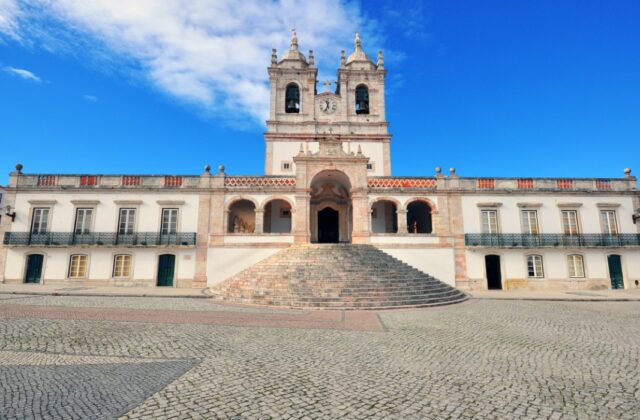
Leave Lisbon after breakfast and keep the afternoon for the Sanctuary of Our Lady of Fatima. Its origins lie in the reported apparitions of the Virgin Mary to three shepherd children, Lucia dos Santos and her cousins Francisco and Jacinta Marto, in 1917. The Chapel of the Apparitions marks the central place associated with those events and remains a focus of prayer.
Cross the large prayer square to visit the Basilica of Our Lady of the Rosary, where the three visionaries are buried. Then consider the Basilica of the Holy Trinity, inaugurated in 2007, for a contrasting view of the sanctuary’s architecture. Religious services shape access and atmosphere, so consult the sanctuary’s official programme rather than assuming every interior will be suitable for sightseeing at any moment.
After lunch, visit Aljustrel, the nearby village where the children lived. Their family homes bring the story back to the scale of everyday rural life. If walking is a priority, allow additional time for the Stations of the Cross route towards Valinhos. Keep dinner straightforward with vegetable soup, grilled fish or roast meat, then return to the sanctuary if an evening service fits your plans.
Day two: Give Batalha a full morning
After breakfast, make the short journey to Batalha and visit the Monastery of Santa Maria da Vitoria. King Joao I founded it to commemorate the Portuguese victory at the Battle of Aljubarrota in 1385. Construction began in 1386 and continued under successive monarchs, producing an exceptional meeting of Gothic architecture and later Manueline ornament. The monastery is a UNESCO World Heritage Site.
Allow roughly two to three hours, longer if architecture is a particular interest. Begin with the soaring church, then explore the Founder’s Chapel, which contains the joint tomb of Joao I and Philippa of Lancaster, alongside tombs of several of their sons. Continue through the Royal Cloister and the chapter house, where Portugal’s Tomb of the Unknown Soldier adds a more recent layer of remembrance.
Save time for the Unfinished Chapels, the roofless royal mausoleum reached by a separate approach. Their elaborate portal makes a memorable conclusion to the visit. After lunch in town, history enthusiasts can continue to the Aljubarrota Battle Interpretation Centre near Sao Jorge, subject to opening hours. Otherwise, leave the afternoon free. A local driver/guide can shape the day around the guests, allowing more time for the monastery or an earlier return.
Browse our travel inspiration for ideas, or tell us what kind of day you have in mind.
Day three: Link Alcobaca with the Atlantic
Travel from Batalha to Alcobaca, approximately half an hour away, for another monastery with a distinctly different character. Founded in the twelfth century, the Cistercian Monastery of Santa Maria de Alcobaca is also UNESCO listed. Its church emphasises height, proportion and relative austerity rather than Batalha’s dense decorative detail.
The great highlights are the fourteenth-century tombs of King Pedro I and Ines de Castro, whose relationship ended with her murder in 1355. Their richly carved monuments deserve close attention, but allow time for the monastic rooms as well. Afterwards, stop at a pastry shop for convent-inspired sweets, often made with egg yolks and sugar, rather than hurrying straight back onto the road.
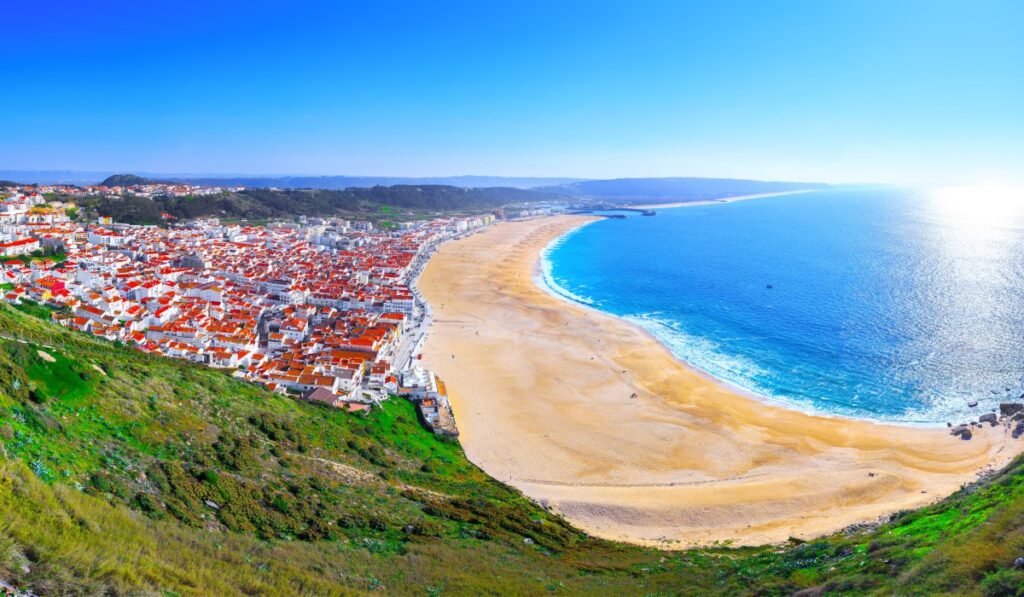
Continue about 20 to 30 minutes to Nazare for lunch and an overnight stay. Around the lower town, look for grilled sardines when in season, caldeirada fish stew or simply grilled fish with potatoes. Spend the afternoon between the beachfront and Sitio, the elevated neighbourhood above it. Praia do Norte is associated with giant-wave surfing, but major waves depend on conditions and are not a daily spectacle.
Day four: Return to Lisbon through Obidos
Use the final morning for breakfast in Nazare before driving roughly 40 minutes to Obidos. This walled town makes a manageable final stop without adding another major monastery. Enter through the tiled Porta da Vila and follow Rua Direita, then turn into quieter lanes to appreciate the whitewashed houses and small squares.
Have lunch before the final drive to Lisbon, usually around an hour from Obidos in normal traffic. Ginjinha, the local sour-cherry liqueur, is an optional tasting for adults who are not driving. The town’s cobbles and wall walks require care, especially when wet; the elevated sections are not essential to enjoying the visit. For a same-day flight, shorten the stop and preserve a generous airport buffer.
Book around worship, weather and walking
Fatima becomes especially busy around the major pilgrimage dates of 12 and 13 May and October. Reserve accommodation early if those dates are central to your trip. Travellers seeking a quieter visit should check the wider religious calendar too. At Batalha and Alcobaca, confirm current admission arrangements, opening hours and any closures before finalising each day.
Pack comfortable shoes, a light layer for cool stone interiors and the coast, and clothing appropriate for active places of worship. Mention mobility needs when planning: Fatima involves substantial distances across open ground, while historic paving can be uneven elsewhere. The strongest itinerary is not the one with the most stops, but the one that leaves room to experience each place properly.
Plan your own day
Share your dates, group size and interests, and we will suggest a tailored plan with a local driver/guide.