Combine Lisbon’s hilltop terraces, historic trams and neighborhood tables over four manageable days. This plan groups nearby sights together, leaving room for steep streets, leisurely lunches and changing light.
Plan by hillside, not by a list of landmarks
Lisbon rewards travelers who resist crossing the city repeatedly. Its viewpoints, known as miradouros, overlook different layers of the capital: Alfama’s tiled roofs, the rebuilt streets of Baixa, church domes and the broad Tagus estuary. Give the eastern hills two days, reserve another for the western neighborhoods, and finish beside the river in Belém. You will see more without turning every afternoon into an uphill endurance test.
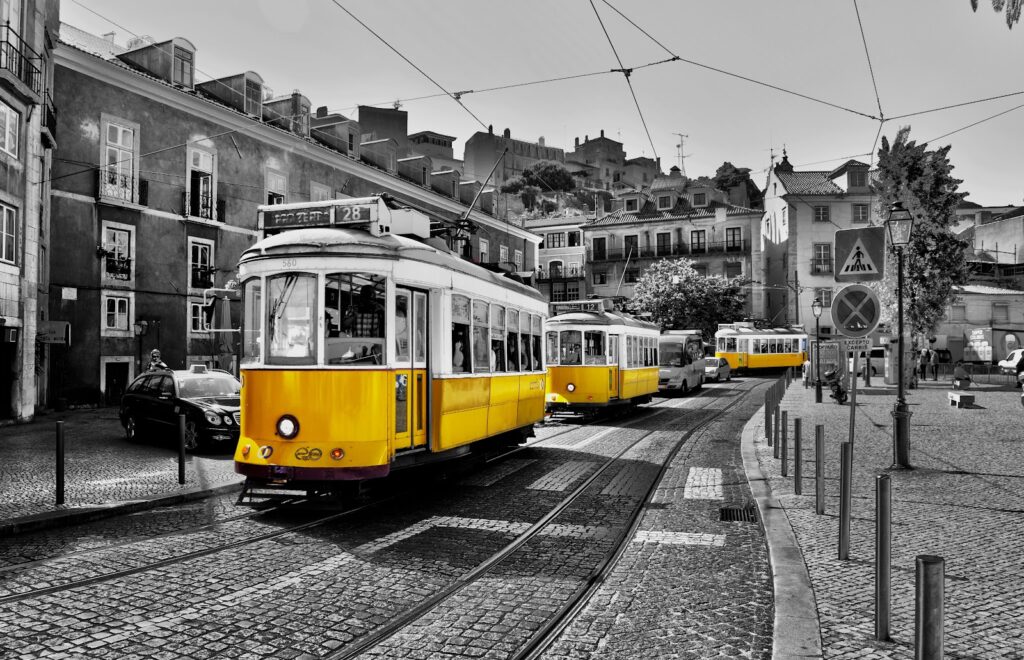
Trams work best as one part of this plan, rather than its organizing principle. Lisbon introduced electric tram services in 1901, and the small historic cars still negotiate streets that feel barely wide enough for them. They are also everyday public transport. Choose a useful section of a route, keep alternatives in mind, and avoid spending your best sightseeing hours waiting for a particular carriage.
Portugal Magik combines guided touring with Mercedes-Benz vehicles. A local driver/guide can shape the day around the guests, adjusting hilltop stops, walking sections and meal breaks while leaving space for an independent tram ride.
Day One: Alfama terraces and the cathedral streets
Begin at Miradouro das Portas do Sol, where Alfama falls toward the river beneath the towers of São Vicente de Fora and the dome of the National Pantheon. A few minutes away, Miradouro de Santa Luzia offers a more intimate setting, with tiled panels and a pergola above the rooftops. These terraces belong together, but allow time at each rather than treating them as duplicate photographs.
Continue toward Lisbon Cathedral, whose origins date to the twelfth century, after the city’s conquest by Afonso Henriques in 1147. The lanes between the terraces and the cathedral are steep and uneven. Wear shoes with grip, pause for traffic, and remember that a tram rounding a corner has little room to spare. Add Castelo de São Jorge only if you want a substantial visit and more climbing.
For lunch, look for bacalhau à Brás, shredded salt cod with finely cut potatoes, eggs and onion. Spend the afternoon wandering downhill through Alfama toward the waterfront. If tram 28E is operating along your intended section and has room, use it for a short ride around the cathedral area. Otherwise, save the tram experience for another day rather than joining a long queue.
Day Two: Graça, the highest outlooks and São Vicente
Start high at Miradouro da Senhora do Monte. Its wide panorama helps explain Lisbon’s geography, with the castle on its separate hill and the river beyond the lower city. Arriving by road reduces the initial climb, although the final approach and surrounding streets still require some walking. Visit early for a quieter atmosphere, or choose late afternoon if warm light matters more than avoiding company.
Walk down to Miradouro da Graça, also called Miradouro Sophia de Mello Breyner Andresen. The terrace beside Graça’s church provides a different angle on the castle and central Lisbon. Stop for coffee before continuing toward São Vicente de Fora, where the monastery’s tile decoration and royal pantheon merit time beyond a quick exterior photograph. Check visiting hours before committing to the interior.
On Tuesdays and Saturdays, combine this area with Feira da Ladra around Campo de Santa Clara. Browse for secondhand objects and ceramics, without assuming every piece is old or locally made. The National Pantheon is nearby, making it a logical addition if energy allows. For lunch, grilled sardines are especially associated with summer; at other times, choose the fresh fish available that day.
Browse our travel inspiration for ideas, or tell us what kind of day you have in mind.
Day Three: Estrela, a useful tram ride and the western terraces
Make Estrela your morning anchor. Visit the eighteenth-century Basílica da Estrela, then cross to Jardim da Estrela for shaded paths and a slower start. This is a good day to try a section of tram 28E toward São Bento and Chiado, subject to the current route and crowding. Riding only part of the line can be more practical than attempting the entire journey from a busy terminus.
From Chiado, continue toward Igreja de São Roque, whose relatively restrained exterior conceals richly decorated chapels. Miradouro de São Pedro de Alcântara is close by, looking across central Lisbon toward the castle. Its garden terraces make a useful pause after museum or church visits, and the view connects visually with the eastern hills explored on the previous two days.
Later, walk or transfer toward Miradouro de Santa Catarina for a river-facing outlook. The route through Bairro Alto and Bica includes slopes and steps, so shorten it when needed. Finish with petiscos, perhaps a small serving of pica-pau, bite-sized meat in a savory sauce, or a plate of Portuguese cheese. Plan dinner nearby rather than returning across town simply to tick off another address.
Day Four: Belém by tram and the river at ground level
After three days of hills, Belém provides a welcome change of pace. Tram 15E connects central Lisbon with the western riverfront, although it generally offers a different vehicle experience from the small historic trams. Check CARRIS information for the day’s service before setting out. Road transport is another sensible option if the tram is crowded or your morning includes a timed admission.
Build the day around Mosteiro dos Jerónimos, begun in the early sixteenth century under Manuel I, and the surrounding riverside district. Allow separately for admission queues and visits. Walk toward the Padrão dos Descobrimentos and along the waterfront toward Belém Tower, using designated crossings between the monument area and the river. Interior access and opening arrangements should be checked in advance.
Stop at Pastéis de Belém, which has been making its celebrated custard pastries since 1837. Then leave the afternoon deliberately light. A riverside walk offers a useful final contrast to Lisbon’s elevated terraces: the same estuary seen without rooftops in the foreground.
Keep the schedule flexible and the tram rides simple
Check current CARRIS routes, ticket options and service notices before each tram outing, since works can alter stops and journeys. Keep valuables secure on crowded vehicles and stand clear of the tracks when taking photographs. For travelers with limited mobility, historic trams, cobbles and steep approaches need particular consideration. Use road transfers between neighborhoods, choose fewer terraces, and preserve time to sit and enjoy the views.
Plan your own day
Share your dates, group size and interests, and we will suggest a tailored plan with a local driver/guide.