Build a Portuguese holiday around Carnival masks, June street parties or autumn chestnut fires. These seasonal itineraries pair festival days with nearby towns, regional food and time to recover between celebrations.
Winter: Four Days for Podence and the Northeast
Portugal’s festival calendar works best as an anchor, not a checklist. Choose one celebration, sleep nearby and use the surrounding days for places that belong together geographically. Confirm the current programme before booking, particularly for events tied to Easter. Portugal Magik’s Mercedes-Benz vehicles suit these journeys between regional bases, while a local driver/guide can shape the day around the guests, balancing festival time with quieter stops and meals.
For Carnival, plan four days from Porto into Trás-os-Montes. Spend the first night in Bragança, roughly three hours away by road, and explore its walled citadel before continuing toward Macedo de Cavaleiros. Reserve the main celebration day for nearby Podence, where the Caretos wear fringed costumes, masks and rattling bells. This living Carnival tradition entered UNESCO’s intangible cultural heritage list in 2019.
Stay around Macedo for two nights rather than returning to Porto after the festivities. Add the Azibo reservoir in daylight, weather permitting, and order regional alheira sausage or warming bean dishes. Winter evenings can be cold, so pack layers and shoes with grip.
Spring: Holy Week in Braga with Guimaraes
Base yourself in Braga for three nights around Semana Santa, whose dates move with Easter. Arrive a day before your chosen procession to understand the historic centre in daylight. Braga Cathedral preserves layers of architecture accumulated over centuries, while the city’s Holy Week ceremonies bring religious observance directly into the streets.
Keep Maundy Thursday evening available for the Ecce Homo procession, traditionally associated with the barefoot, hooded farricocos carrying rattles or other ceremonial objects. Check that year’s route and timing, and treat the event as worship rather than a performance. A central hotel reduces the need to cross traffic restrictions late at night.
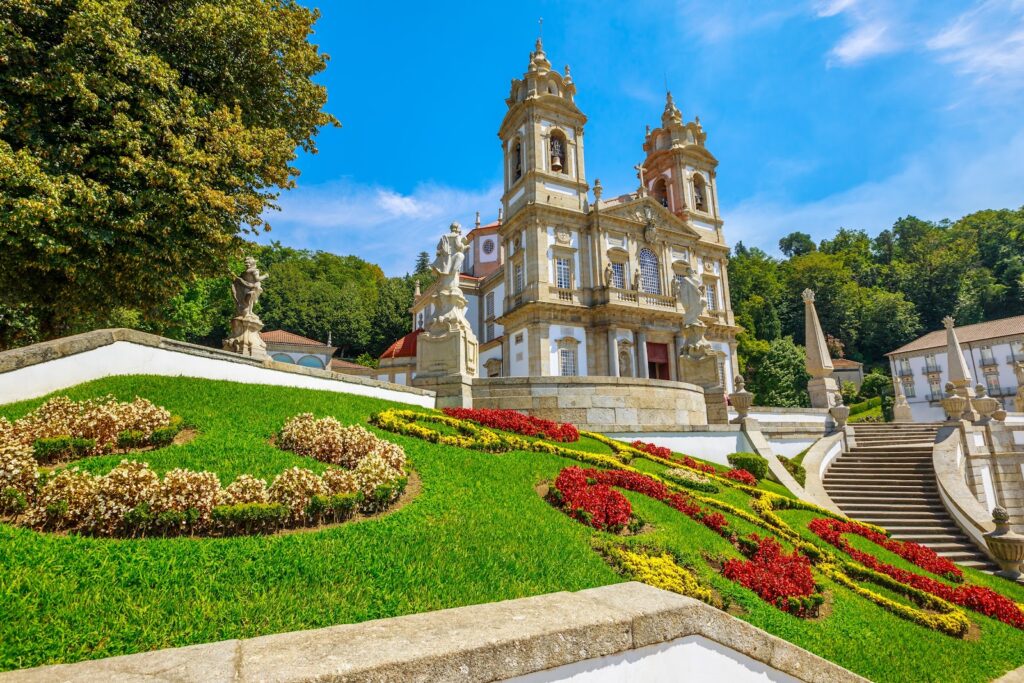
Use another day for Guimarães, around half an hour away by road, combining its castle district with the Palace of the Dukes of Bragança. On your final morning, visit Bom Jesus do Monte outside Braga before returning to Porto. Try bacalhau à Braga and a small serving of pudim Abade de Priscos, the rich pudding associated with a nineteenth-century local priest.
Early Summer: Lisbon for Santo Antonio
Give Lisbon four days around 12 and 13 June. The busiest festive evening is usually 12 June, ahead of Saint Anthony’s feast day and Lisbon’s municipal holiday. Neighbourhood arraiais fill streets with music and food, while the Marchas Populares bring competing neighbourhood groups to Avenida da Liberdade. Verify the official programme before deciding which evening to keep free.
Spend day one around Baixa and Chiado, leaving Alfama for a daylight orientation on day two. Return for the celebrations with a simple plan: grilled sardines on bread, caldo verde and plenty of time on foot. Saint Anthony was born in Lisbon, although his name is also closely associated with Padua in Italy.
Make day three deliberately slow. Belém offers a change of setting, with the Jerónimos Monastery and pastéis de nata, subject to opening schedules and queues. Finish with a day in Cascais rather than another crowded city evening. Agree on pickup points outside restricted streets, since a vehicle cannot follow you through the festival lanes.
Browse our travel inspiration for ideas, or tell us what kind of day you have in mind.
Late June: Porto and a Gentle Minho Extension
Porto’s São João celebrations peak on the night of 23 June, leading into the feast day on 24 June. Allow four days, with two or three nights in Porto before continuing north. Arrive on 22 June if possible, so the historic centre and riverside are not first encountered at their most crowded.
Use the festival day for a short morning visit or a booked port lodge tour in Vila Nova de Gaia, then rest before heading out. Plastic hammers, grilled sardines and street music are familiar features of the evening. Fireworks traditionally focus attention on the Douro around midnight, but viewing arrangements, crossings and transport restrictions need checking each year.
Do not schedule an early departure the following morning. Have a late breakfast, then travel toward Ponte de Lima for a quieter overnight stay. Walk beside the Lima River and explore the old centre before returning to Porto on day four. Arroz de sarrabulho is a substantial local speciality, made with pork and blood, best chosen with that description in mind.
August: Viana do Castelo and the Lima Valley
For a summer festival with strong maritime connections, spend four days around Viana do Castelo’s Romaria de Nossa Senhora d’Agonia. It takes place in August, with exact dates and the sequence of events published annually. Book accommodation early and choose your main festival day according to the programme, rather than assuming every procession happens on one weekend.
Begin with Viana’s historic centre and the Costume Museum, which provides useful context for the elaborate regional dress seen during the celebrations. Traditional gold jewellery, embroidery and the fishing community’s devotion to Our Lady of Agony are central to the festival’s identity. Look for the programme’s ethnographic parade and religious processions.
Keep a second day for the celebrations, then spend day three upriver in Ponte de Lima. On day four, choose Caminha and the Minho estuary before returning south to Porto. Around Viana, try pescada à Vianense, a regional hake preparation, and save room for a torta de Viana, a rolled sponge cake with an egg-rich filling.
Autumn: Chestnuts in Marvao and the Border Hills
November suits a slower four-day journey from Lisbon to the northern Alentejo. Marvão’s Feira da Castanha usually takes place during the month, celebrating chestnuts alongside regional produce and crafts. Confirm its dates before arranging accommodation, since the hilltop village has limited capacity and festival access may involve designated parking or local transport arrangements.
Travel first to Castelo de Vide, allowing roughly three hours from Lisbon before stops. Spend the afternoon around its castle and historic Jewish quarter, then stay locally for three nights. Dedicate the next day to Marvão’s fair, leaving time for roasted chestnuts and the views from its fortified ridge.
On day three, explore the Roman remains of Ammaia near São Salvador da Aramenha, checking current opening hours, and take a short walk in the Serra de São Mamede if conditions allow. Return to Lisbon on day four via Portalegre. Across the region, look for Alentejo pork dishes, sheep’s cheese and seasonal sweets. Bring a waterproof layer: autumn mountain weather can change the day’s priorities.
Plan your own day
Share your dates, group size and interests, and we will suggest a tailored plan with a local driver/guide.