
Discover how well-traveled Americans seamlessly pair Lisbon day excursions across several days, taking in historic palaces, coastal cliffs, and regional food without driving stress.
1. Sintra and Cabo da Roca, balancing mountain palaces with wild ocean cliffs
Sintra sits just forty minutes west of central Lisbon, yet its microclimate and lush pine forests transport you into a completely different landscape. Well-traveled Americans often rank this excursion first because of the sheer density of architecture, from the romantic turrets of Pena Palace to the mysterious grottos of Quinta da Regaleira. Navigating the steep, winding mountain roads and tight village streets can be stressful behind the wheel, which is why having an experienced local driver to manage the transit and parking makes a substantial difference in the overall rhythm of the morning.
After exploring the forested peaks, you can descend toward Cabo da Roca, the westernmost point of continental Europe, where granite cliffs drop straight into crashing Atlantic surf. Rather than rushing back to Lisbon immediately, seasoned travelers enjoy pairing this stop with a late seafood lunch in nearby Praia das Macas or Guincho, sampling fresh sea bass grilled simply over charcoal with olive oil and potatoes.
2. Cascais and the Estoril Coast, maritime elegance and effortless walking
Cascais offers a classic coastal day that appeals particularly to travelers who appreciate walkable towns with deep historical roots. Originally a sleepy fishing settlement that became a summer refuge for European royalty in the late nineteenth century, the town center blends shaded plazas, pastel mansions, and sheltered Atlantic coves. Americans who have explored the French Riviera or Italian coastal towns often comment on how friendly, safe, and accessible Cascais feels by comparison, with virtually every shopkeeper and restaurateur speaking fluent English.
A well-planned multi-day Lisbon base allows you to pair Cascais with the broader Estoril coastline. You can spend the morning admiring the contemporary art collection at the Casa das Historias Paula Rego or walking the coastal path past the Boca do Inferno chasm. For lunch, seaside spots along the marina serve exceptional arroz de marisco, a rich Portuguese seafood rice brimming with prawns and clams, paired with crisp Arinto white wine.
3. Obidos and Nazare, medieval battlements meeting giant Atlantic waves
Heading an hour north into the Silver Coast region lets you combine two radically different eras of Portuguese culture in a single day. Obidos is a fully preserved medieval town encircled by fourteenth-century stone battlements. Within its gates, whitewashed cottages lined with bougainvillea lead toward small storefronts where you can sip ginjinha, a sour cherry liqueur poured into edible chocolate cups. The compact footprint makes it a delight to explore at an unhurried pace before morning crowds arrive.
Continuing thirty minutes further north brings you to Nazare, a traditional fishing port now famous globally for the record-breaking monster waves that strike the North Beach submarine canyon during winter. From the high clifftop district of Sitio, looking down past the lighthouse and chapel of Nossa Senhora da Nazare, the view across the coast is expansive. American travelers appreciate the opportunity to sit right on the beachfront for lunch, enjoying grilled sardines and barnacles while listening to local fishing stories.
Browse our travel inspiration for ideas, or tell us what kind of day you have in mind.
4. Evora, ancient Roman pillars and deep Alentejo wine country
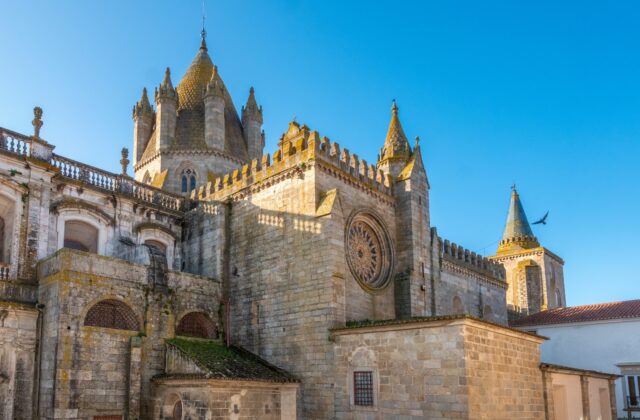
While many travelers keep their day trips coastal, venturing ninety minutes east across the Vasco da Gama Bridge opens up the sun-drenched plains of the Alentejo. Evora, a UNESCO World Heritage center, anchors the region with its Roman Temple of Diana, its fortified Gothic cathedral, and the fascinating seventeenth-century Chapel of Bones inside the Church of Saint Francis. For American history enthusiasts, the town provides an intimate walk through two thousand years of urban development inside preserved defensive walls.
The surrounding countryside produces some of Portugal’s most celebrated full-bodied red wines, crafted from native grapes such as Trincadeira and Aragonez. Traveling with a local driver and guide allows you to shape the afternoon around an estate visit for an unhurried tasting and farm lunch featuring black pork tenderloin and aged sheep cheeses, returning to Lisbon before evening without navigating highway exits on your own.
5. Arrabida Natural Park and Setubal, turquoise waters and tile heritage
South of the Tagus River, the Serra da Arrabida Natural Park presents a striking limestone mountain ridge covered in Mediterranean scrub that plunges directly into turquoise waters. This area feels surprisingly untamed despite being less than an hour from Lisbon. Americans who appreciate uncrowded nature often rank this drive among their favorites, combining panoramic views from the summit road with quiet coves like Portinho da Arrabida, where traditional fishing boats bob peacefully in crystalline waters.
From the park, the route connects seamlessly to Setubal, home to the Livramento Market, one of the most vibrant fish and produce markets in Southern Europe, famous for its grand panels of blue and white glazed tiles. A typical lunch here features the local specialty of choco frito, tender fried cuttlefish served with lemon wedges and house-made potato chips. The afternoon rounds out well with a stop at the nearby village of Azeitao, known for producing creamy sheep milk cheese and Moscatel dessert wine.
6. Tomar and the Convent of Christ, tracking the Knights Templar
Located an hour and fifteen minutes northeast of Lisbon, Tomar appeals strongly to travelers fascinated by architectural grandeur and deep European history. The Convent of Christ, originally the twelfth-century stronghold of the Knights Templar and later the Order of Christ, ranks among the most remarkable monumental complexes on the Iberian Peninsula. Visitors can walk through centuries-old Gothic cloisters and stand before the famous Manueline Chapterhouse Window, carved with ropes, coral, and navigation emblems that evoke the Age of Discovery.
Planning Tomar as a focused day trip from Lisbon lets you explore the historic riverfront town below, where stone lanes lead past the ancient synagogue, one of the oldest preserved in Portugal. The easy pace of the town makes a relaxed lunch of roast kid goat or wild boar stew with local Ribatejo wine thoroughly enjoyable. On the return drive toward Lisbon, many travelers enjoy a brief detour to the island fortress of Almourol, perched on a granite outcropping in the middle of the Tagus River.
Plan your own day
Share your dates, group size and interests, and we will suggest a tailored plan with a local driver/guide.