Discover how easily historic hilltop hamlets fit into a seamless multi-day Portugal itinerary without the hassle of navigating narrow mountain roads yourself.
1. Marvao, perched high above the Alentejo plains
Rising nearly three thousand feet above sea level near the eastern border, Marvao gives travelers sweeping views over rolling plains and granite ridges. American visitors accustomed to the crowded hill towns of Tuscany or Provence often find Marvao delightfully tranquil. The medieval stone walls remain fully intact, enclosing whitewashed cottages with flower boxes, peaceful courtyards, and quiet stone lanes that lead straight up to the ninth-century castle keep.
Marvao integrates easily into a multi-day route through the Alentejo, pairing naturally with a base in nearby Evora or Castelo de Vide. After an afternoon walk along the parapets, travelers can sit down to regional chestnut soups, wild boar stew, and earthy local reds made from Trincadeira and Aragonez grapes. The tight turns leading to the village gates can test unfamiliar drivers, which is why having an experienced driver and guide in a spacious Mercedes-Benz vehicle lets you focus entirely on the landscape.
2. Monsaraz, overlooking the shimmering Alqueva reservoir
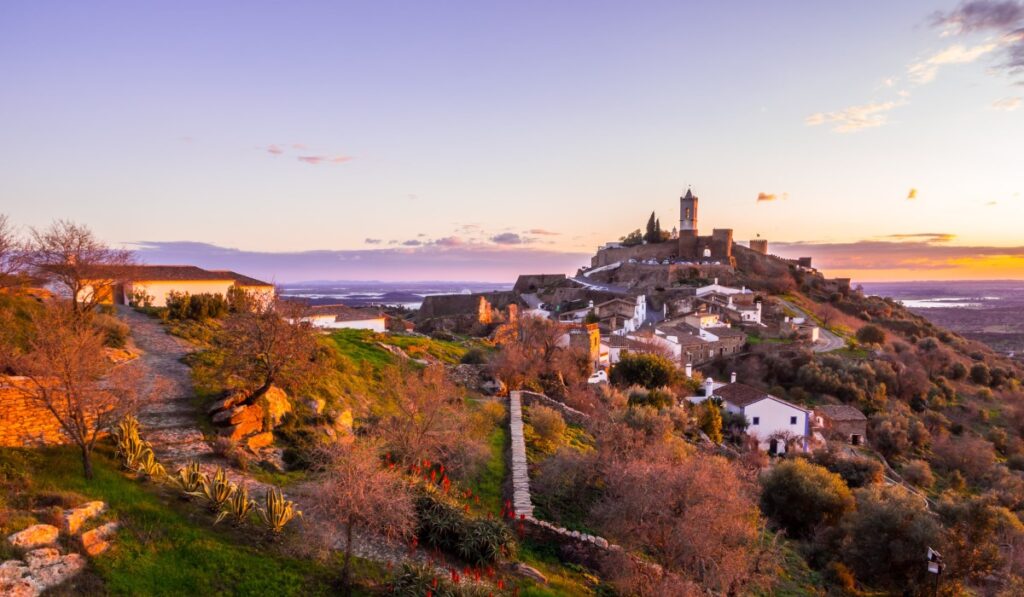
Perched above the vast Alqueva reservoir, Monsaraz is an open-air museum constructed from schist and slate. Walking through its ancient archway feels like stepping backward half a millennium. Whitewashed homes flank cobbled lanes that open into small plazas where visitors sip crisp Antao Vaz white wines and sample sheep cheeses drizzled with regional honey.
From an itinerary standpoint, Monsaraz fits effortlessly into a south-central loop. It sits just under an hour east of Evora, making it an ideal mid-day stop before heading north toward the Tagus basin. Because parking outside the fortified gates is strictly managed and the roads across the plains are best enjoyed without GPS stress, a guided journey allows travelers to explore at their own relaxed pace while taking in ancient megalithic sites scattered across the surrounding valley.
3. Castelo Rodrigo, a storied stop on the historic border
Situated in the northern interior, Castelo Rodrigo holds centuries of border history. It served as a protective bulwark during conflicts with Castile and offered shelter to pilgrims journeying toward Santiago de Compostela. Today, the village retains its dramatic ruined palace, an ornate Manueline pillory, and stone ramparts that look out across vast almond orchards.
For Americans planning a northbound trip from central Portugal toward the Douro Valley, Castelo Rodrigo provides a rewarding inland detour. The local culinary scene highlights wild game, honey produced from local heather, and roasted almonds seasoned with regional herbs. Visiting with a local driver and guide allows you to uncover the subtle Jewish heritage carved into medieval doorways that casual visitors easily overlook.
Browse our travel inspiration for ideas, or tell us what kind of day you have in mind.
4. Sortelha, wrapped within ancient granite ramparts
Sortelha ranks among the oldest and best-preserved historical villages in the country. Giant granite boulders sit embedded right into the houses, blending human architecture seamlessly with natural rock formations. Its fortress stands watch over rugged hills, creating a striking contrast with the softer vineyard landscapes further west.
Sortelha works brilliantly as a key highlight when connecting Coimbra to the northern interior. Spending a morning wandering Sortelha before driving on to Belmonte offers deep insight into traditional mountain culture. After walking the cobbled streets, travelers can enjoy rustic dishes like roasted kid goat, oven-baked codfish, and dense sourdough breads that reflect the hearty culinary roots of the Beira Alta region.
5. Monsanto, the village sculpted from giant stones
Crowned by a Templar stronghold, Monsanto is famous for homes constructed beneath, around, and sometimes directly inside massive granite boulders. Walking the steep paths reveals centuries of creative rural engineering where bedrock forms floors and forty-ton rocks serve as roofs. The panoramic views from the summit take in mountains stretching into neighboring Spain.
American travelers often compare Monsanto favorably to remote mountain hamlets in southern Europe because the welcome is warm, safety is absolute, and English is widely spoken in the local taverns. Fitting Monsanto into a cross-country route between Lisbon and Porto requires winding through central mountain passes. Having a dedicated driver navigate these roads ensures you arrive refreshed and ready to climb the stone paths.
6. Piodao, the amphitheater of schist in the Serra do Acor
Tucked into a protected fold of the Serra do Acor mountains, Piodao resembles a Nativity scene carved from dark slate and schist. The village cascades down the mountainside, characterized by stone roofs, rustic wooden doors painted bright blue, and a pristine white parish church standing out in sharp relief against the dark masonry.
Reaching Piodao involves navigating serpentine mountain roads that reward travelers with cinematic views of deep ravines and pine forests. It makes an unforgettable midday exploration when traveling between the university city of Coimbra and the central Serra da Estrela highlands. A stop here is incomplete without tasting chestnut liqueurs, cured sausages, and dense honey cakes baked using heritage mountain recipes.
7. Almeida, the twelve-pointed star on the eastern frontier
Unlike the medieval perches of the south, Almeida is a masterclass in military engineering from the seventeenth and eighteenth centuries. Viewed from the air, its thick stone walls form an intricate twelve-pointed star designed to withstand heavy artillery fire during the Peninsular War. Inside the defensive perimeter lies a tranquil, organized village of granite streets and historic barracks.
Almeida pairs seamlessly with Castelo Rodrigo when heading toward the upper Douro wine region. It offers an incredible look at Portugal’s strategic role in European history, explained best when a knowledgeable guide brings the subterranean casemates and siege battles to life. Exploring these far-flung fortifications in total comfort gives travelers a rich understanding of the country that extends far beyond the major coastal cities.
Plan your own day
Share your dates, group size and interests, and we will suggest a tailored plan with a local driver/guide.