
A return visit to Portugal need not repeat Lisbon, Sintra and Porto. Build your next journey around smaller regions, longer lunches and two or three comfortable bases, with time to enjoy what lies between the landmarks.
1. A familiar arrival can lead to an entirely different week
For Americans who already know Lisbon, returning through a familiar airport makes it easier to concentrate on somewhere new. Spend the first two nights in the capital, leaving arrival day largely free, then head southeast to Évora for three nights. The drive usually takes around 90 minutes to two hours, depending on traffic and your starting point. This creates a manageable introduction to the Alentejo without another flight or a succession of hotel changes. English is widely spoken in visitor-facing businesses in Lisbon and Évora, although a few Portuguese greetings remain useful in smaller villages.
Give Évora a full day for its Roman temple, cathedral and whitewashed streets, then use another for Monsaraz, roughly an hour away. The fortified village overlooks the Alqueva reservoir, with lanes best explored before the hottest part of the day. Return for dinner rather than adding another overnight stop. For couples and retirees, that combination offers the pleasure of discovery without rebuilding the entire travel routine.
2. The places between major cities deserve their own itinerary
A first trip often treats central Portugal as the distance between Lisbon and Porto. A second visit can turn it into a four-night journey, with two nights in Tomar and two in Coimbra. From Lisbon, allow roughly two hours to reach Tomar without sightseeing stops. Reserve the following morning for the Convent of Christ, where the Templar origins of the complex sit alongside later Manueline architecture. Its celebrated chapter house window rewards a closer look rather than a hurried photograph.
Continue toward Coimbra on another day, considering a stop at the Roman site of Conímbriga, south of the city. Its surviving mosaics add a different historical layer before Coimbra’s university quarter. Book the appropriate university visit ahead if the Joanina Library is a priority. This route suits families with older children and travelers who prefer one substantial visit each day. It also avoids squeezing Tomar, Batalha and Coimbra into a single exhausting transfer.
3. Wine country becomes more rewarding when you stay overnight
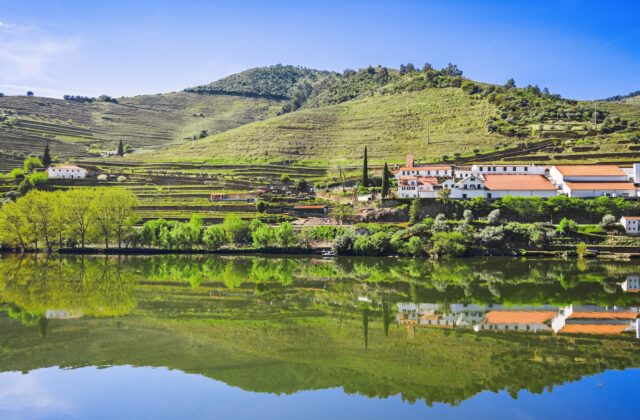
Americans accustomed to Napa or European vineyard holidays may find that a brief Douro excursion leaves unfinished business. On a return trip, spend two nights in Porto followed by three near Pinhão or Peso da Régua. Porto to Pinhão generally requires around two hours or more by road, depending on the route. Treat the journey as a transfer with one planned stop, not an excuse to schedule several tastings. Vineyard roads are winding, and travel times can be longer than distances suggest.
Give one day to an estate visit and lunch, then another to villages and viewpoints, perhaps including Casal de Loivos above Pinhão. Taste Douro table wines as well as port, with visits arranged in advance. A local driver/guide can shape the day around the guests, allowing a longer lunch or fewer stops without anyone needing to drive after a tasting. Portugal Magik offers private travel in Mercedes-Benz vehicles, making this a practical way to connect city and vineyard stays.
Browse our travel inspiration for ideas, or tell us what kind of day you have in mind.
4. Regional food provides a reason to travel beyond familiar menus
A second Portuguese holiday can follow the appetite rather than the checklist. Allow three nights in Setúbal, reached from Lisbon in about an hour outside heavy traffic, then three in Évora. Setúbal is known for choco frito, fried cuttlefish commonly served with fries, while its Mercado do Livramento introduces the seafood and produce behind local kitchens. Check market opening days before planning a morning around it. Nearby Azeitão adds sheep’s milk cheese and the wines of the Setúbal Peninsula.
Across the Alentejo, look for açorda alentejana, a bread-based preparation with garlic, coriander and olive oil, often served with a poached egg. Migas and regional pork dishes make another satisfying contrast with the coast. Restaurant meals and local wines can offer appealing value compared with similarly positioned choices in popular parts of France, Italy or Spain, though location and establishment matter. Schedule one longer lunch every other day rather than turning every meal into an appointment.
5. A coastal return does not have to revolve around busy resorts
Travelers who first encountered Portugal through Lisbon or the western Algarve can build a different seaside week around Tavira. Stay four nights there, then add two in Faro if its old town and airport access suit the journey. Tavira’s historic center straddles the Gilão River, while its ocean beaches lie beyond the Ria Formosa lagoon system. That geography matters: beach days generally require a ferry or other local crossing rather than simply walking from a central hotel onto the sand.
Alternate an island beach day with a shorter outing to Cacela Velha, whose whitewashed village overlooks the lagoon. Another day can combine Olhão’s waterfront markets with lunch, checking opening hours beforehand. Families gain flexibility by keeping afternoons open, while couples can linger over grilled fish without a long drive afterward. Portugal is generally a comfortable destination for independent exploration, but ordinary precautions still apply to belongings, ocean conditions and unfamiliar streets after dark.
6. Returning makes it easier to choose depth over distance
The strongest reason to come back may be permission to do less. Instead of repeating a countrywide circuit, spend three nights in Porto and three in Guimarães. Visit Guimarães’s castle and Palace of the Dukes of Braganza on separate half-days, leaving time for the historic center. Braga is roughly a half-hour drive away, making its cathedral and Bom Jesus do Monte a realistic day trip rather than another hotel move. At Bom Jesus, the funicular offers an alternative to climbing the monumental staircase.
For multigenerational groups, that slower structure accommodates different walking speeds and interests. Ask about steps and vehicle access when choosing hotels, since historic streets are not uniformly easy underfoot. Keep one unscheduled half-day in each base for weather, shopping or a favorite café. A second Portugal journey works best when it feels less like completing a map and more like finding a region worth knowing.
Plan your own day
Share your dates, group size and interests, and we will suggest a tailored plan with a local driver/guide.