Link castle towns, Alentejo vineyards and granite villages on an eight-day journey from Lisbon toward Porto. This route balances substantial sightseeing with relaxed lunches, realistic driving times and room to linger.
1. Óbidos, an easy first chapter after Lisbon
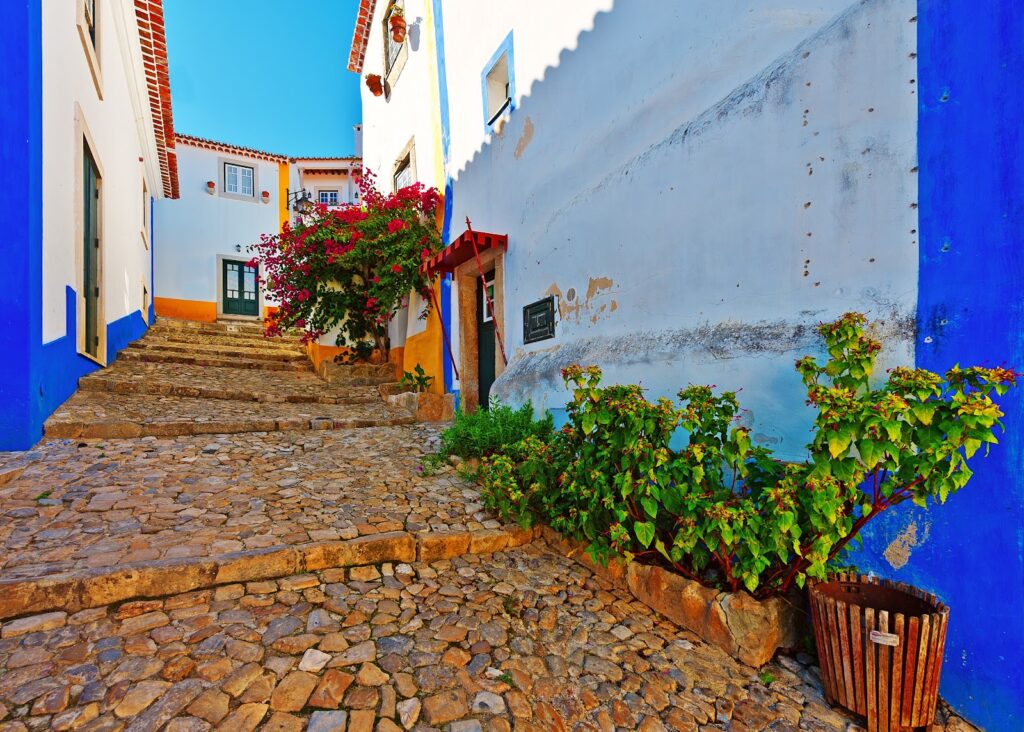
Start with Óbidos on day one, roughly an hour north of Lisbon by road. Its enclosed historic center offers an immediately satisfying introduction to Portugal: a fortified gateway, whitewashed houses, narrow lanes and a castle overlooking the rooftops. King Dinis gave the town to Queen Isabel in 1282, strengthening its long association with Portuguese queens. Allow half a day rather than treating it as a photograph stop. Walk Rua Direita, step into the Church of Santa Maria when open, then explore side streets away from the busiest shops. English is widely spoken in visitor-facing businesses here, making this a straightforward first stop for Americans.
Sleep nearby before the longer journey southeast. Try ginjinha, the local sour-cherry liqueur, and look for dishes featuring fish from the nearby Atlantic coast. Families should approach the ramparts cautiously: sections are narrow, uneven and lack protective railings. Travelers concerned about heights can enjoy the town entirely at street level. Portugal Magik’s Mercedes-Benz vehicles make the transfer comfortable without guests needing to negotiate parking outside the walls.
2. Monsaraz, worth two nights for the Alentejo setting
On day two, allow approximately three hours to drive from Óbidos to Monsaraz, before adding breaks. This is a transfer day, not a short hop, so keep the afternoon uncomplicated. The medieval village occupies a ridge above the Alqueva reservoir, with stone lanes, whitewashed buildings and a castle at its southern end. Portuguese forces took Monsaraz from Muslim rule in 1232 under King Sancho II. Its borderland position becomes clear from the battlements, looking across a landscape that now includes the vast reservoir. Stay two nights in the surrounding countryside to experience the village after day visitors leave.
Use day three for a return visit in cooler morning light, followed by lunch and a winery appointment near Reguengos de Monsaraz. Order migas, a bread-based preparation often served with pork, or lamb stew when available. Compare regional wines by the glass rather than rushing between estates. Americans weighing Portugal against France, Italy or Spain should compare actual hotel and dining choices: regional restaurants and Alentejo wines can offer attractive value, but prestigious estates and sought-after rooms are not automatically inexpensive.
3. Marvão, a hilltop overnight rather than a rushed detour
Travel north to Marvão on day four, allowing around two and a quarter hours from Monsaraz without stops. The final approach climbs into the Serra de São Mamede, where the village sits on a granite ridge close to Spain. Its history reaches back to the ninth-century rebel leader Ibn Marwan, while the surviving castle and defenses reflect later medieval rebuilding. Begin with the castle, including its enormous cistern, then follow the lanes through the enclosed village. The views reward clear weather, but the architecture remains compelling when clouds soften the distant landscape.
Stay overnight in Marvão or nearby rather than adding another substantial drive. A local driver/guide can shape the day around the guests, bringing the castle visit forward in cooler weather or allowing a longer lunch before tackling the slopes. Ask about seasonal chestnut dishes and Alentejo pork specialties. Comfortable shoes matter more than ambitious mileage here: cobbles, gradients and exposed steps can make a compact village surprisingly tiring, especially for younger children or travelers with limited mobility.
Browse our travel inspiration for ideas, or tell us what kind of day you have in mind.
4. Castelo de Vide, close enough to make day five unhurried
Castelo de Vide lies roughly 20 minutes from Marvão, making this the route’s easiest pairing. Spend day five here while keeping the same accommodation. Its fortified upper quarter clusters around the medieval castle, although the wider town extends beyond those defenses. That distinction matters if you are expecting another fully enclosed village. Wander downhill through the historic Jewish quarter, where doorways and steep lanes lead toward the building traditionally identified as the medieval synagogue, now a museum. The visit adds the history of Portugal’s Jewish communities to a journey that could otherwise become a sequence of battlements.
Leave time for the Renaissance marble Fonte da Vila and a seated lunch rather than scheduling every hour. This short transfer offers couples and families a welcome pause after several sightseeing days. Try regional sheep’s cheese and ask which local sweets are available at the pastry counter. English is less consistent in small neighborhood businesses than in major visitor centers, but a translated menu or help from your guide usually makes ordering straightforward. Return to your accommodation before dinner instead of moving suitcases again.
5. Sortelha, a compact medieval village with room to wander
On day six, head north toward Sortelha, allowing roughly two and a half hours from Castelo de Vide, depending on the route. The scenery shifts toward the granite country of inland central Portugal. King Sancho II granted Sortelha a charter in 1228, and its castle and surrounding walls preserve a remarkably coherent medieval setting. Houses fit closely among the rocks, with lanes opening onto views across the surrounding hills. Give the village a full afternoon, including lunch, rather than racing through its small enclosed center in an hour.
Stay around Sortelha or nearby Belmonte for the night. Regional menus may include cabrito, or roast kid, while cheese lovers should look for Queijo Serra da Estrela, the celebrated sheep’s-milk cheese from the wider region. Check opening days for restaurants and monuments, particularly outside the busiest season. The practical advantage of not driving yourselves becomes especially clear in these small settlements: parking belongs outside the historic core, and narrow lanes are better explored on foot. Castle access still requires care on uneven stone.
6. Trancoso, a final walled town before continuing to Porto
Continue to Trancoso on day seven, approximately an hour and a quarter from Sortelha. Enter through the Portas d’El Rei and explore a town whose medieval walls enclose a living center, not simply a castle precinct. King Dinis married Isabel of Aragon here in 1282. The castle occupies the higher ground, while the Isaac Cardoso Jewish Interpretation Center provides context for another important chapter of local history. Allow time for both: Trancoso rewards travelers who want more than picturesque streets and a quick climb to a viewpoint.
Look for sardinhas doces, Trancoso’s traditional sweet pastries, which contain no fish despite their name. Stay locally, then allow around two and a quarter hours to reach Porto on day eight, with extra time for any airport arrangements. The result is a journey with six distinct towns, several genuinely short transfers and enough overnight stops to avoid exhausting sightseeing days. Choose fewer castle climbs, longer lunches and the places that interest you most: Portugal’s walled towns work best when the itinerary leaves room for life inside them.
Plan your own day
Share your dates, group size and interests, and we will suggest a tailored plan with a local driver/guide.