Build an eight-day journey around Alvarinho, Loureiro, Touriga Nacional, Encruzado and Baga, linking vineyard visits with river towns, historic streets and regional meals. This practical route runs from the Minho to Bairrada, with enough time to understand what is in your glass.
Plan the route before choosing the bottles
Portuguese wine labels can feel like a vocabulary lesson, but travelling makes the names easier to remember. Alvarinho becomes a hillside near the Spanish border; Baga becomes a plate of roast suckling pig in Bairrada. Rather than collecting regions at speed, spend eight days following a manageable northern route: two nights around Ponte de Lima, three in the Douro and two around Viseu, finishing through Bairrada on the way to Porto.
Start from Porto after allowing time to recover from your flight. Book winery appointments before fixing lunches, since many estates receive visitors only at scheduled times. One substantial tasting each day usually leaves room for a town, a viewpoint and a proper meal. Portugal Magik pairs private guided travel with Mercedes-Benz vehicles, and a local driver/guide can shape the day around the guests, balancing wine interests with walking, photography or longer lunches. Travellers who are not tasting should have equally worthwhile stops.
Days 1 and 2: Give Alvarinho and Loureiro separate days
Use Ponte de Lima as your first base, enjoying its riverside streets and bridge, whose surviving fabric includes Roman and medieval sections. For the Alvarinho day, head northeast to Monção and Melgaço, a celebrated subregion of Vinho Verde beside the Minho River. Alvarinho often brings citrus, stone-fruit character and considerable texture. Ask to compare a young example with an older bottle if available: these wines can develop well beyond their first summer.
On the second day, stay closer to the Lima Valley and seek out Loureiro, known for its floral and citrus aromas. This is also the moment to discard the idea that Vinho Verde means a grape, or that every bottle must be fizzy. It is a wine region producing several styles. Pair a tasting with fish at lunch, or try Ponte de Lima’s arroz de sarrabulho if you enjoy robust local food. This pork-and-blood rice dish is a regional speciality, often served with rojões, pieces of cooked pork.
Days 3 and 4: Move into the Douro and decode the blend
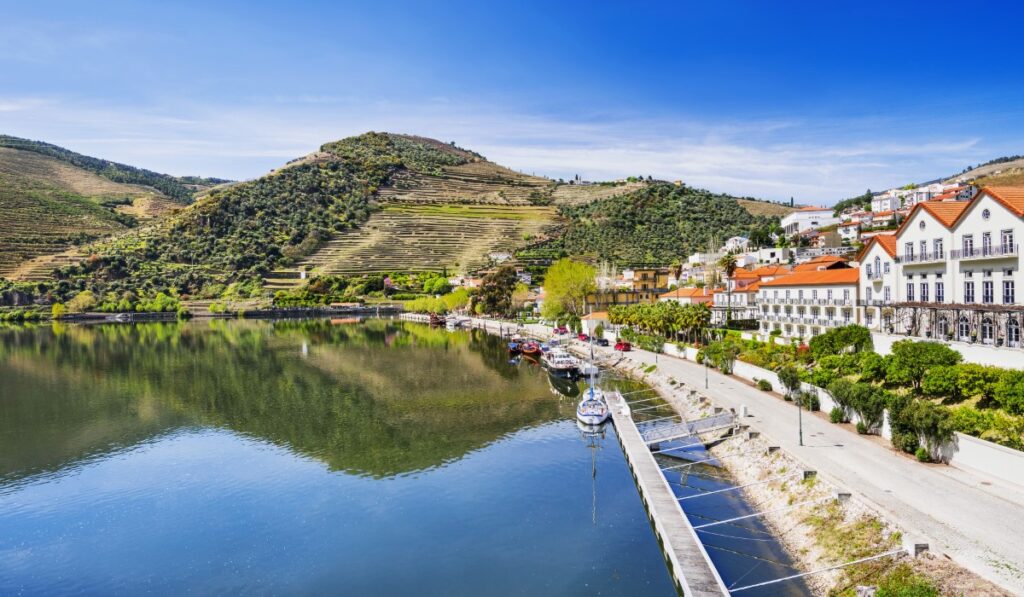
Leave the Minho after breakfast and make the Douro transfer the main event of day three. Choose a base around Peso da Régua or Pinhão, rather than attempting a tasting immediately after every scenic stop. Régua’s Museu do Douro provides useful context for the landscape and wine trade. The Douro was demarcated in 1756, and the Alto Douro Wine Region became a UNESCO World Heritage Site in 2001.
Dedicate day four to a vineyard visit around Pinhão. Touriga Nacional often contributes floral character and structure, Touriga Franca fragrance and body, and Tinta Roriz, the Portuguese name for Tempranillo, fruit and firmness. These are tendencies, not fixed recipes. Many Douro wines are blends, and older vineyards may contain numerous varieties planted together. Ask whether the wine comes from separately managed grape varieties or a mixed vineyard. Afterwards, examine the harvest-themed tile panels at Pinhão railway station, then leave the afternoon for the river road rather than another appointment.
Browse our travel inspiration for ideas, or tell us what kind of day you have in mind.
Day 5: Compare Douro table wine with Port
A second full Douro day lets you understand how the same region produces dry table wines and Port. Port is fortified during fermentation, leaving natural grape sweetness; dry Douro wines generally complete fermentation without that intervention. Request a visit that explains both, rather than assuming every estate offers the same tasting format. A small comparison is more useful than a crowded flight of unfamiliar bottles.
Keep lunch regional: roast kid, when available, works well with a structured red, while lighter dishes make sense before an afternoon tasting. Add the hilltop village of Provesende for stone houses and a different perspective on the valley. Roads climb and twist, so allow more time than the map’s distance suggests. September can bring harvest activity, but its timing changes with the season and vineyard. Book ahead, and treat any opportunity to observe harvest work as dependent on the producer’s arrangements.
Days 6 and 7: Find a different register in the Dão
Travel south to Viseu on day six and use the historic centre as a gentle introduction to the Dão. Visit the cathedral area and the Museu Nacional Grão Vasco, whose paintings connect the city with Portugal’s Renaissance. Save the main winery appointment for day seven around Santar or elsewhere within comfortable reach of Viseu. This avoids turning a transfer day into a timetable of rushed arrivals.
Here, ask for Encruzado, a white grape capable of combining freshness with texture and developing complexity with age. Compare versions made with and without oak if the producer offers them. For reds, revisit Touriga Nacional alongside blends containing Jaen, Alfrocheiro or Tinta Roriz. The point is not to declare one region better, but to notice differences in growing conditions and winemaking. At lunch, look for Queijo Serra da Estrela, the protected sheep’s-milk cheese from the neighbouring mountain region. Its rich texture makes an interesting pairing with a substantial white.
Day 8: Finish with Baga and a Bairrada lunch
From Viseu, head towards Bairrada for a final appointment around Anadia or Mealhada before returning to Porto. Baga is the key red grape to explore here, often producing wines with marked acidity and tannin. Producer, vintage and winemaking matter greatly, so ask how a younger bottle differs from one with time in the cellar. Bairrada also makes sparkling wine, including examples using Baga.
Build the day around leitão da Bairrada, roast suckling pig with crisp skin, traditionally served with potatoes and orange slices. A dry sparkling wine is a classic companion. If time permits, the Museu do Vinho Bairrada in Anadia adds context, but check opening hours and protect the onward drive. Finish in Porto that evening rather than tying the day to a tight flight connection. You will leave with more than grape names: each bottle will recall a place, a meal and a day that had room to unfold.
Plan your own day
Share your dates, group size and interests, and we will suggest a tailored plan with a local driver/guide.