Spend five days linking lagoon islands, fishing villages and Atlantic headlands rather than racing between famous beaches. This east-to-west itinerary uses two bases and leaves room for tides, seafood lunches and changing coastal weather.
Set up five days with two coastal bases
The Algarve becomes easier to enjoy away from the busiest resorts when you stop treating its coastline as a single beach destination. East of Faro, barrier islands shelter the channels and salt marshes of the Ria Formosa. Farther west, small fishing settlements sit between limestone headlands, before the coast turns north into exposed Atlantic country. Give these landscapes five days, with two nights in Tavira followed by three around Vila do Bispo or Salema.
This route works naturally after an arrival at Faro Airport. May, June, September and October often offer a more comfortable balance of daylight and visitor numbers than peak summer, although popular beaches still attract people. Portugal Magik can connect the mainland stops in Mercedes-Benz vehicles, with a local driver/guide shaping the day around the guests, whether that means a longer village lunch or fewer walks. Keep ferry tickets, beach conditions and seasonal opening hours as separate checks rather than assuming everything runs year-round.
Day 1: Settle into Tavira before crossing to the island
Begin in Tavira itself, not at the beach. Walk beside the Gilão River, cross the old bridge commonly called the Roman bridge, whose present structure is largely later, and climb towards the castle remains. The Igreja de Santa Maria do Castelo occupies the site traditionally associated with the former principal mosque, a reminder that the Algarve remained under Muslim rule until the thirteenth century. These stops fit comfortably into a morning without making the day a history marathon.
After lunch, use the passenger ferry from Quatro Águas to Ilha de Tavira, checking the current timetable before setting out. The beach nearest the landing attracts most arrivals; walking farther along the sand usually creates more space, though supervised bathing areas should guide swimming choices. Bring water and sun protection even outside summer. Back in town, look for octopus dishes or grilled fish, asking what is fresh rather than expecting every species on the menu to be locally available.
Day 2: Pair Cacela Velha with the working waterfront at Santa Luzia
Drive east from Tavira to Cacela Velha early, when the small whitewashed settlement is easier to appreciate before day visitors accumulate. Its church and fortress overlook one of the Algarve’s finest lagoon panoramas: pale sandbanks, tidal channels and the ocean beyond. The fortress is not a conventional visitor attraction with freely accessible interiors, so come for the village and viewpoint. The configuration of water and sand changes with the tide, making this a place to observe rather than a beach crossing to improvise.
Return west for lunch in Santa Luzia, the fishing village closely associated with octopus. Polvo à lagareiro, baked or roasted with olive oil, garlic and potatoes, is a satisfying choice for a slow lunch. Afterwards, choose either a waterfront stroll or nearby Praia do Barril, reached from Pedras d’El Rei by a pedestrian route or the small tourist train when operating. Its anchor cemetery recalls the former tuna-fishing industry. Barril is well known, so treat the historic approach as the attraction and walk farther along the beach if conditions allow.
Browse our travel inspiration for ideas, or tell us what kind of day you have in mind.
Day 3: Make Olhao the useful stop on your move west
Leave Tavira after breakfast and stop in Olhão before continuing to your western base. The twin red-brick market buildings beside the waterfront are especially rewarding in the morning, when the fish counters explain more about local eating than a generic restaurant menu. Check trading days, particularly around Sundays and holidays. Outside, the old fishing quarter has narrow lanes and rooftop terraces; explore a few streets rather than trying to cover the entire town.
For lunch, consider a fish or shellfish cataplana, cooked in the Algarve’s hinged metal vessel. Ingredients vary, and the dish is frequently intended for two, so ask before ordering. Then continue towards Vila do Bispo or Salema, allowing roughly an hour and a half to two hours for the drive depending on route and traffic. Resist adding an island excursion today: ferries and a proper beach stop would turn a useful transfer into a rushed day. Settle in and keep the evening close to your accommodation.
Day 4: Link Salema, Figueira and Zavial without collecting beaches
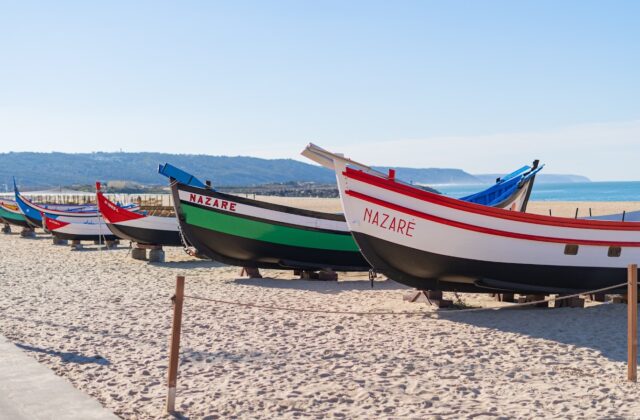
Start in Salema, where fishing boats and equipment still share the village beachfront with visitors. It is not an undiscovered settlement, but an early walk reveals a quieter rhythm than a midday arrival. Have coffee, look along the waterfront, then decide whether you actually want another beach. Choosing one longer stop is more rewarding than driving to every cove on the map.
Praia da Figueira requires a walk along a rough valley path from the parking area, making sturdy footwear useful and access less suitable for anyone with limited mobility. Alternatively, continue to Praia do Zavial, where road access brings you closer to the sand. Both demand attention to swell and local warnings; a sheltered appearance does not guarantee safe swimming. Never sit directly beneath cliffs, and use designated access routes. Return through Vila do Bispo for dinner, looking for grilled fish or conquilhas, small clams often prepared with garlic, olive oil and coriander, when available.
Day 5: Finish on the Atlantic side at Carrapateira
Turn north to Carrapateira for a final day that feels distinctly different from the lagoon coast. This area lies within the Southwest Alentejo and Vicentine Coast Natural Park. Praia da Bordeira opens into a broad landscape of dunes and sand, while nearby Praia do Amado is strongly associated with surfing. Choose between them according to wind, visibility and how much walking you want, rather than assuming both need a lengthy visit.
Combine a beach stop with selected viewpoints around Pontal da Carrapateira, using marked paths and staying well back from exposed edges. Wind can make an otherwise sunny day feel cool, so carry a layer. The village’s Museu do Mar e da Terra provides context on local fishing and farming if its opening hours suit. Finish with lunch before returning south, leaving time to pack or extend your stay. If flying from Faro, consider spending the final night nearer the airport when departure timing makes a western base impractical.
Plan your own day
Share your dates, group size and interests, and we will suggest a tailored plan with a local driver/guide.